
みるかなた本棚>『ポケットモンスターおりがみコレクション』>ポケモンおりがみ一覧表>0003フシギバナ
◆0001フシギダネ◆0002フシギソウ◆0003フシギバナ◆
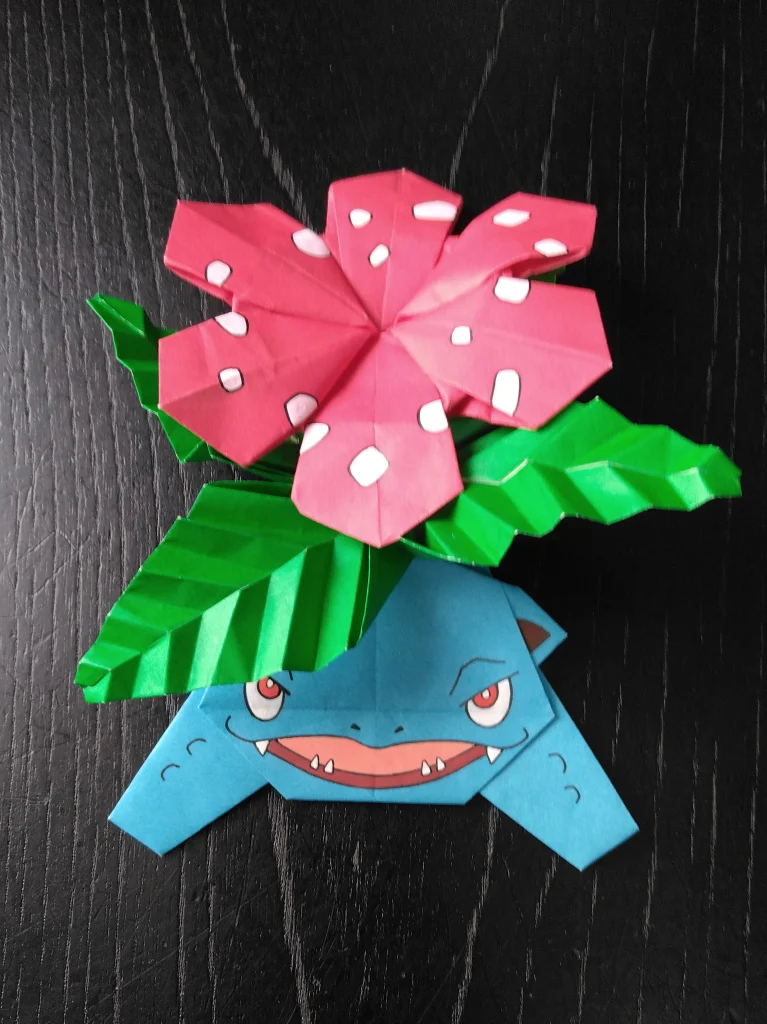
0003 フシギバナ
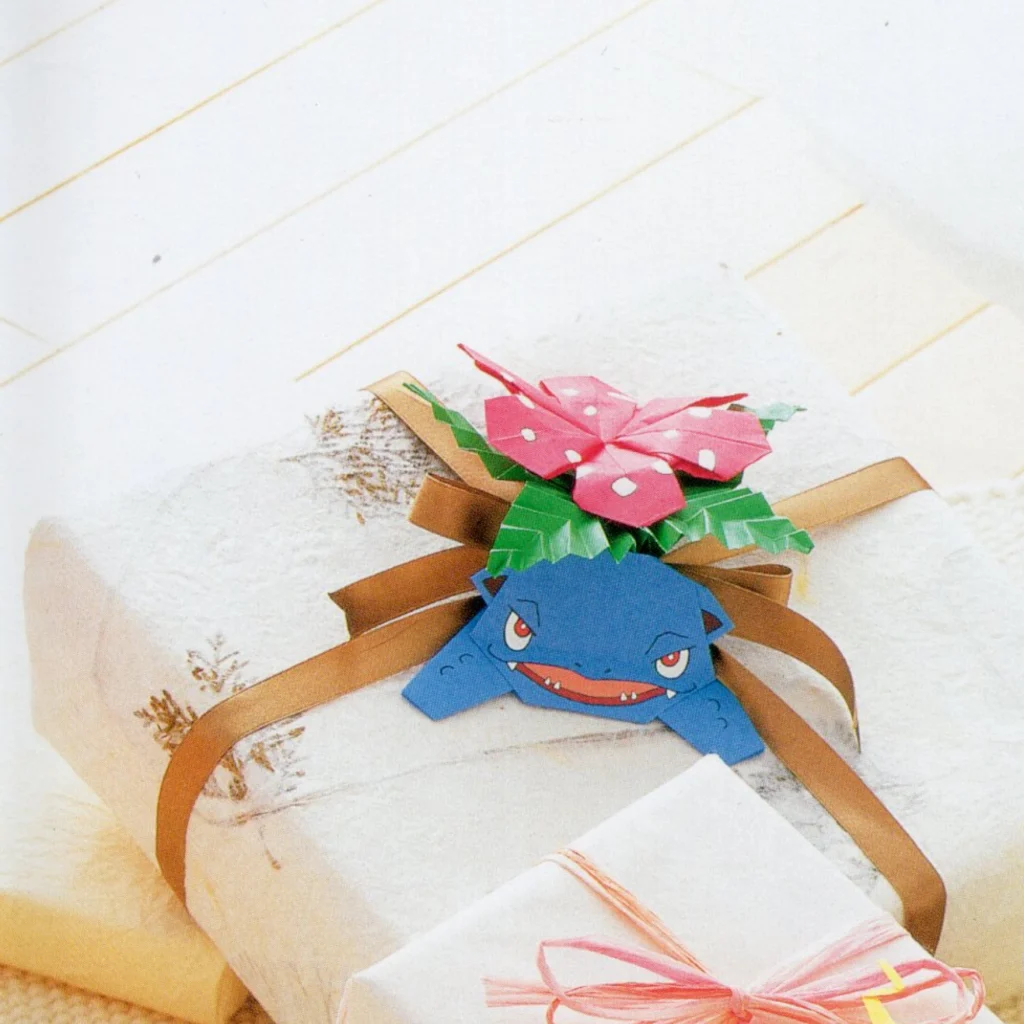
いろいろな角度からデッサンして、はな、はっぱ、ともに、平面でつくるかたちを模索したのですが、うまく表現できるかたちを見つけることができませんでした。
それで、少し厚みのある造形になりました。
はなも、はっぱも、ちょっとばかり手の込んだ折り方をします。
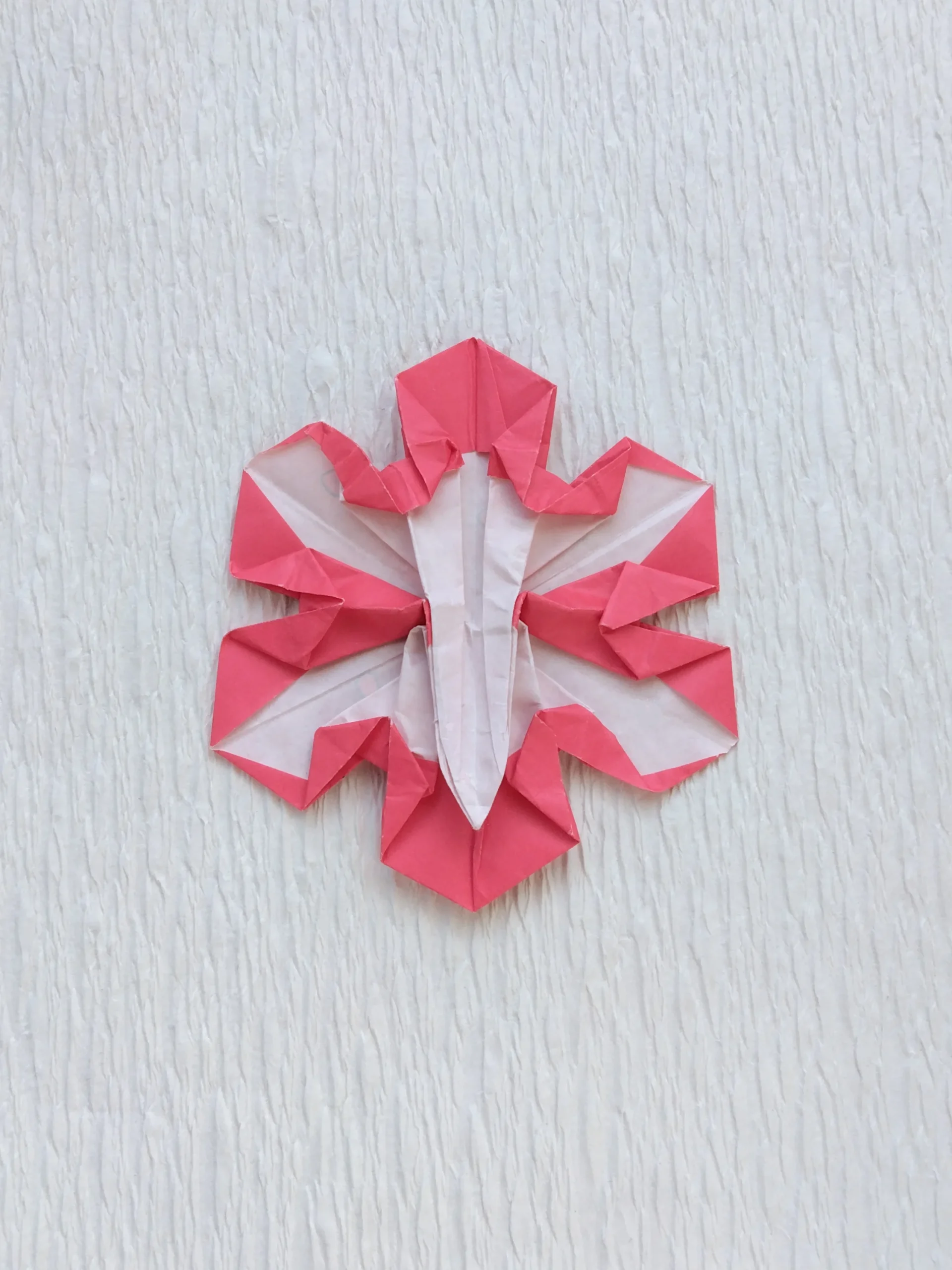
はなは、正6角形をつくって、はなに開くために細かくたたみ込んでいきます。
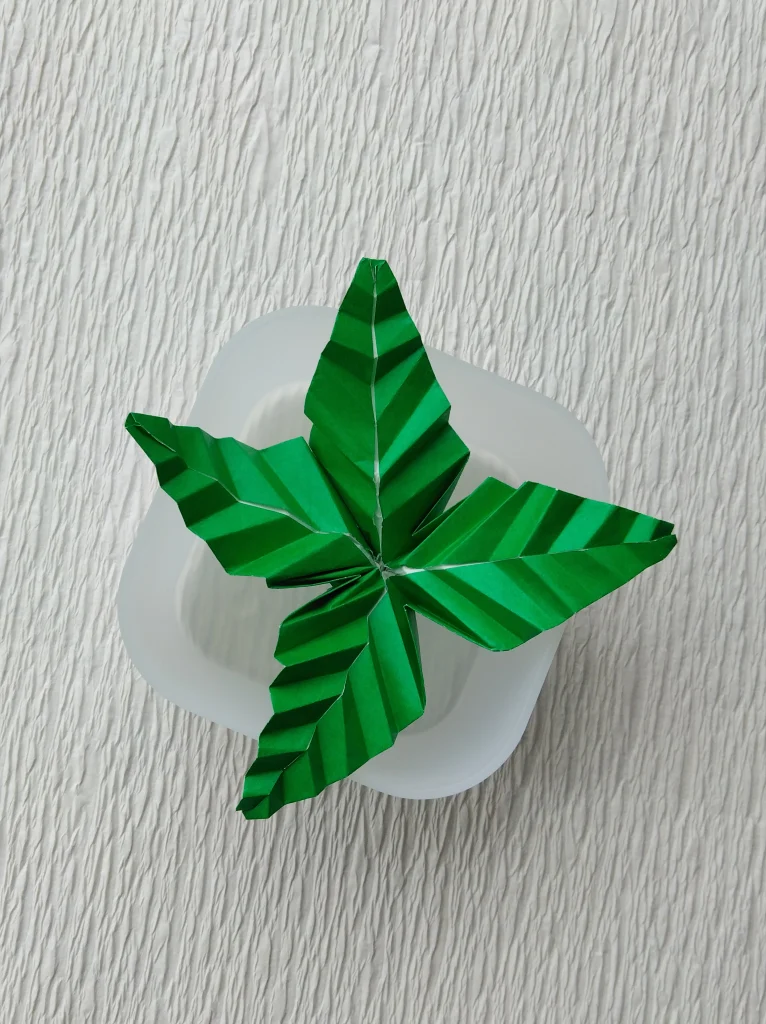
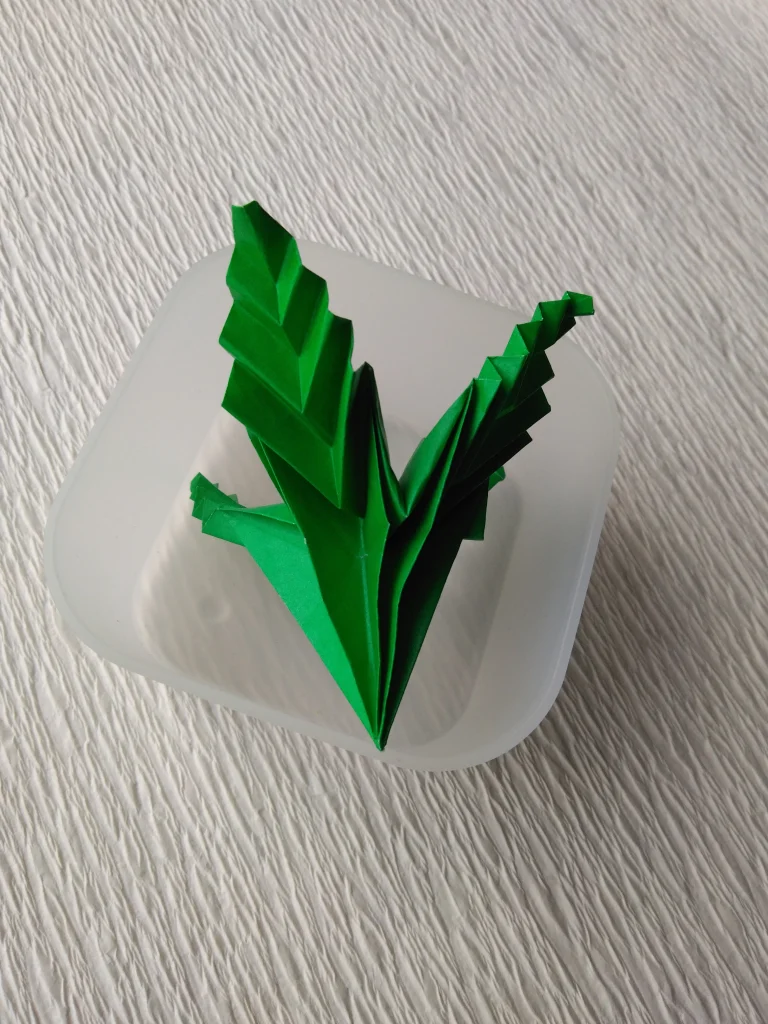
はっぱは、山を平たい面にするアイディアと、各片の独立性と自由度を確保するアイディアと、ふたつのテクニックを使用しています。
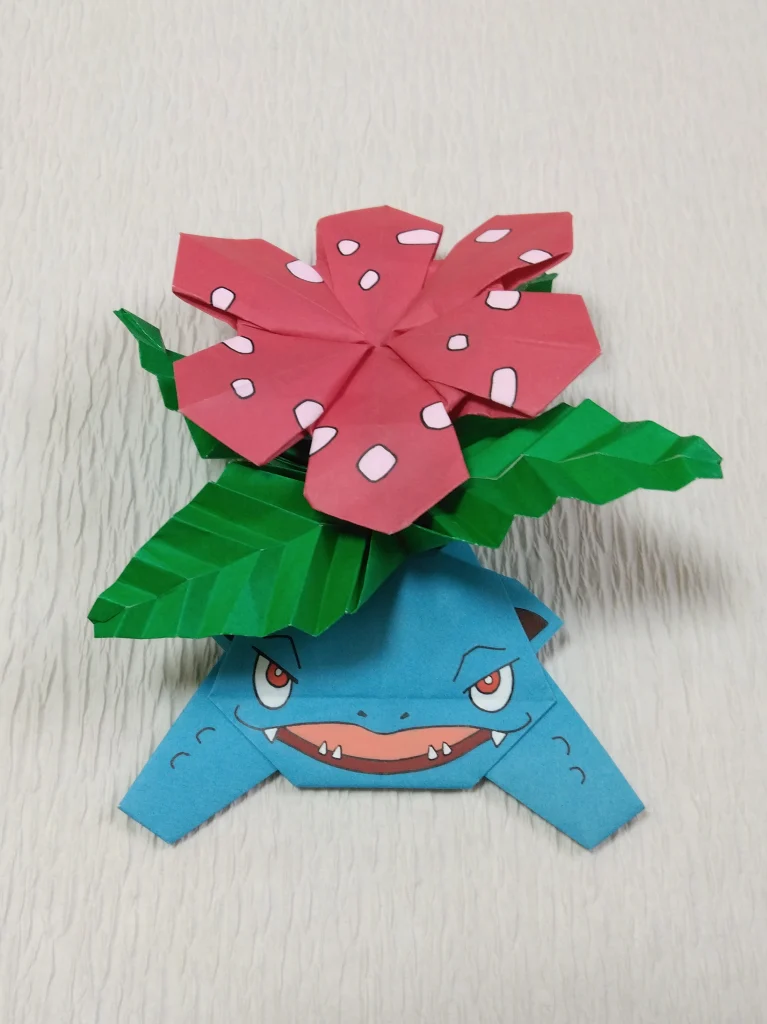
からだは、フシギダネ、フシギソウ、フシギバナ、の3種類共通の、図式的なかたちです。
子どもたちにストレスをかけないように、折り方が複雑にならないようにしていたためです。
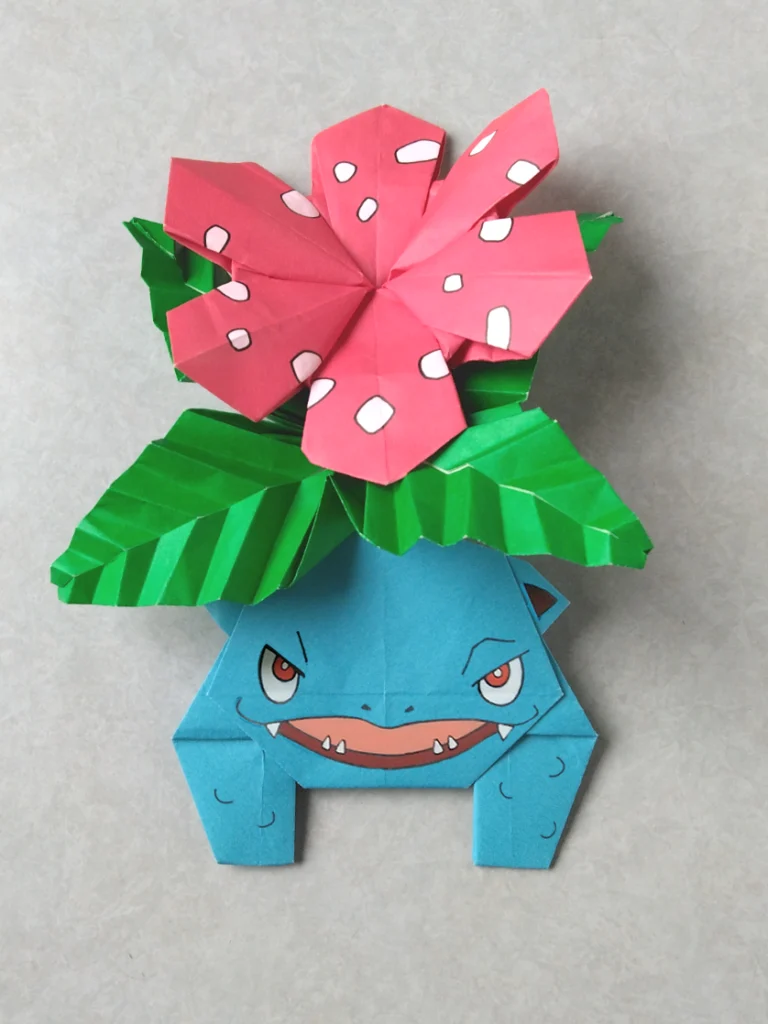
◇フシギバナの個別のボディは新作ni-p003フシギバナのページに掲載しています。
◇別作新作ファン創作は
Nice Origamiファン創作
のページをご覧ください。
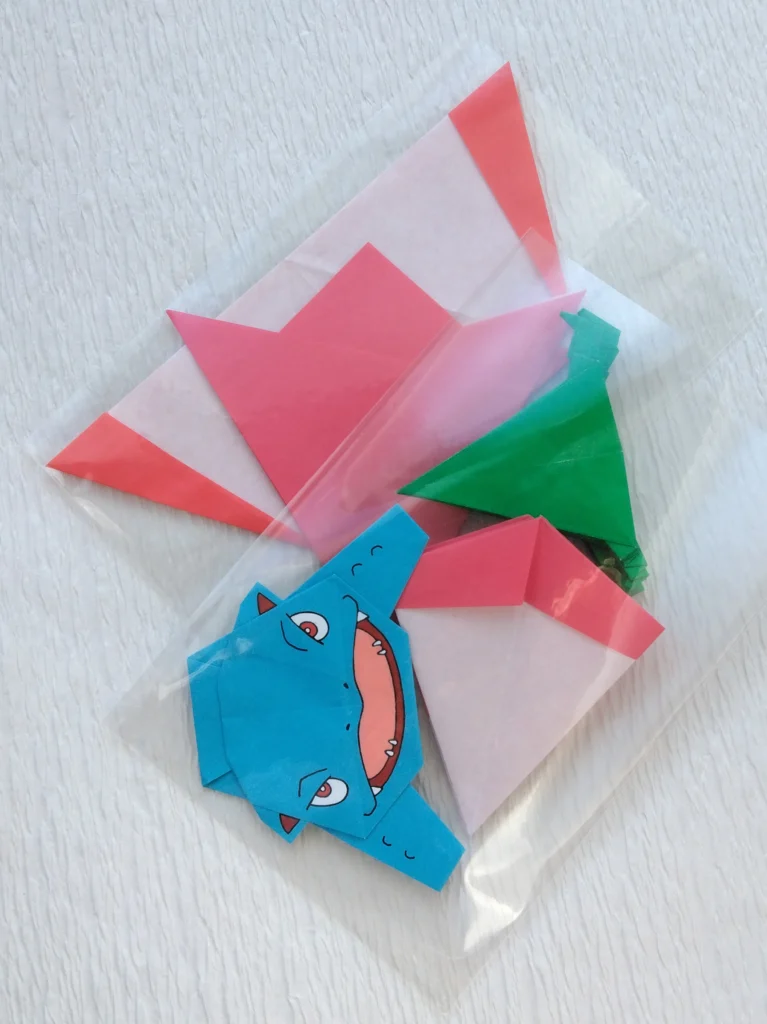
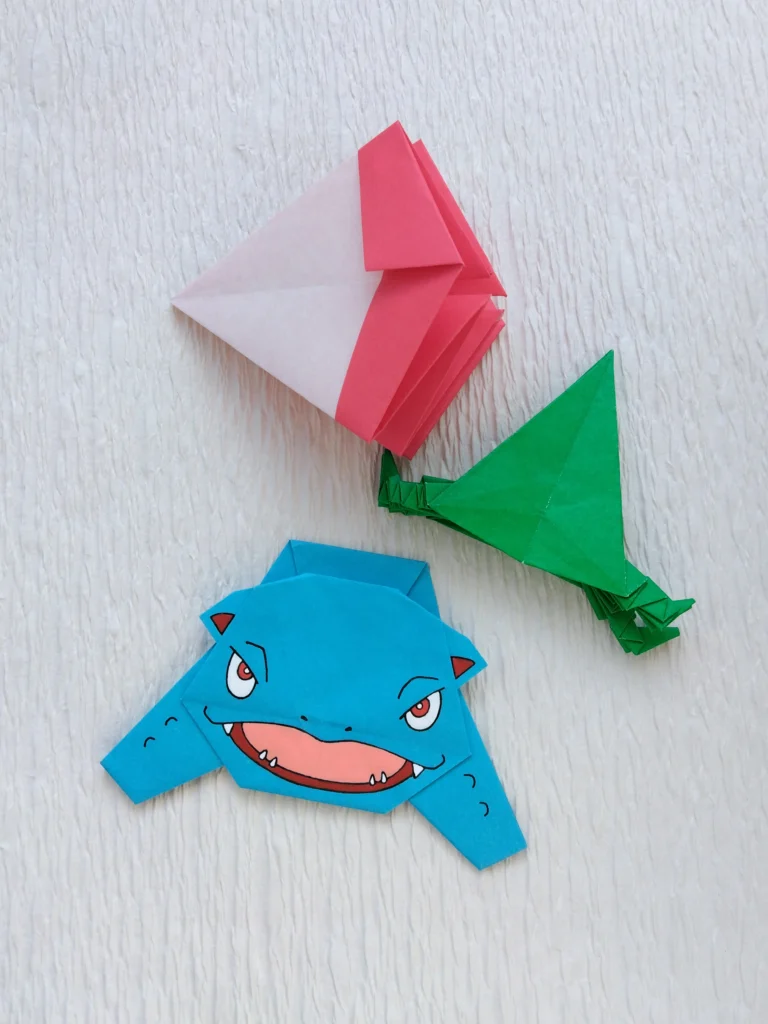
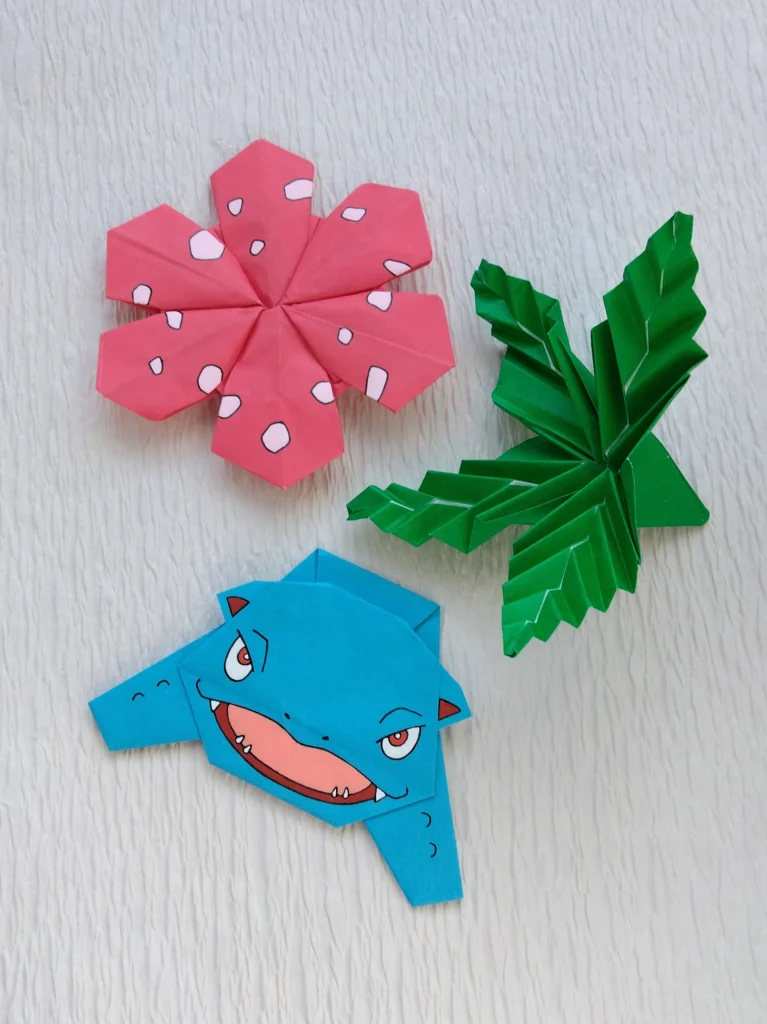
立体になると、保管に場所をとるし、また破損の機会も増えます。
ですから、使用する場合以外は、たたんで透明袋に入れて、おりがみの箱にしまっています。
必要になったら、箱から出して組み立てます。
フシギバナのはっぱ
フシギバナのはっぱは、椰子(ヤシ)の葉や棕櫚(シュロ)の葉のように、葉の縁を取り巻いて切り込みがたくさんあります。
この切り込みを幾何的に再現するのは、とてもできません。
それで、ちょっと違うけど雰囲気は似てるかなと思って、葉の縁をぎざぎざにすることにしました。
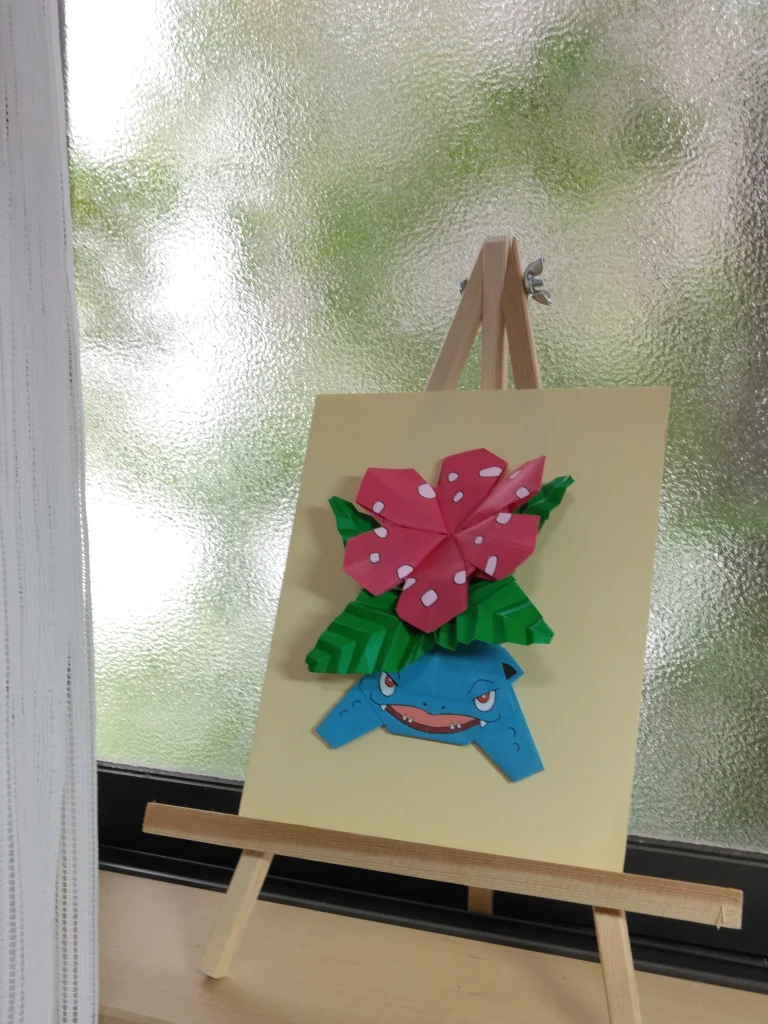
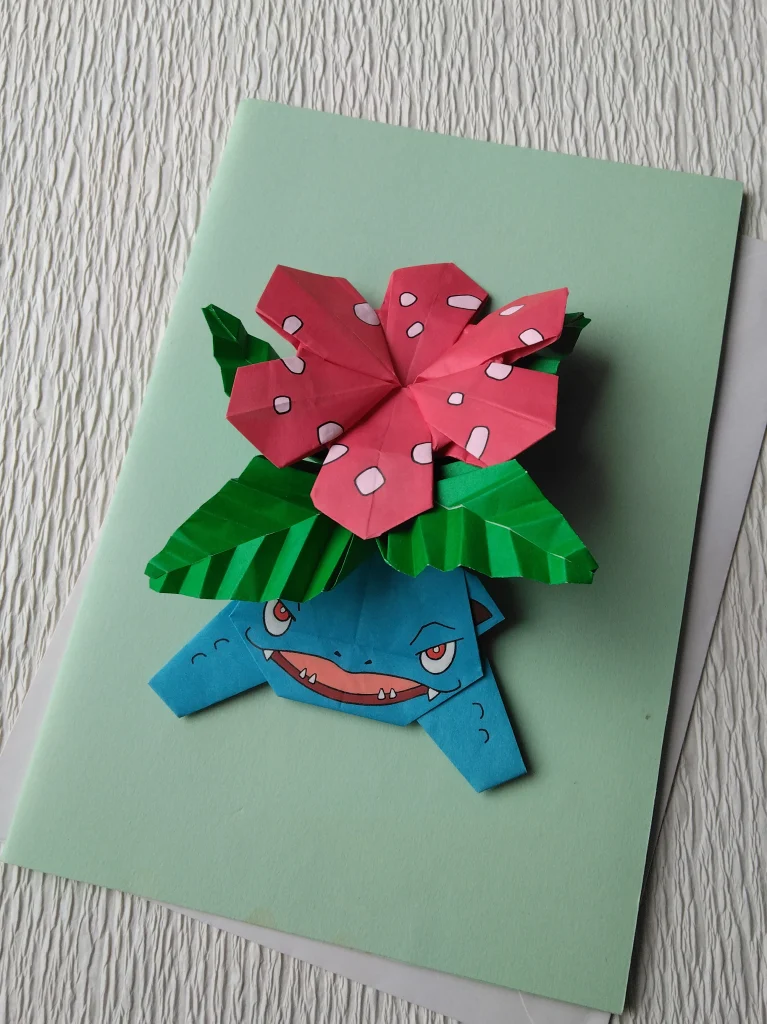
グリーティングカードにした場合、少し厚みがありますけれど、封筒に入りました。
でも、はなやはっぱが潰れてしまったら悲しいので、相手に直接手渡しして「潰さないように」と伝えることができるときに使用するのがよろしいかと思います。
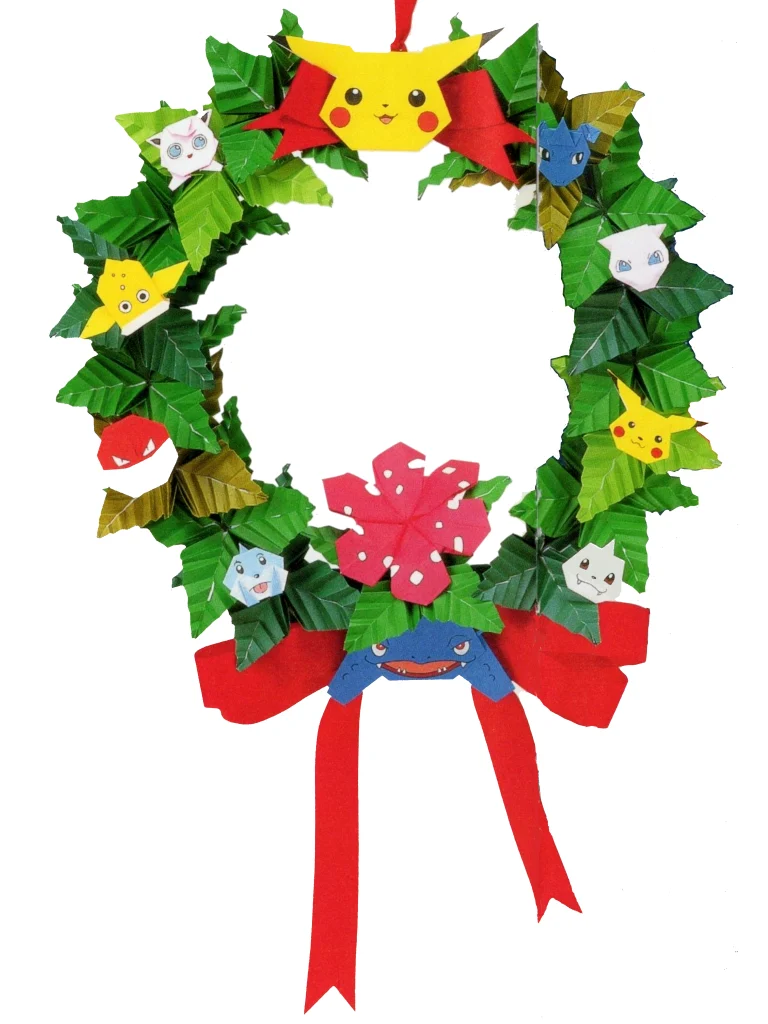
この作品は1999年に著作権者の監修を受け正式に許諾を得たものです。
★ゲームフリークのチェック
◆姿かたちは、最初のチェックでOKをいただきました。
◆紙の色は、からだは青色、はっぱは緑色、はなは紅色、それぞれこの色をご指定でした。
Evolution
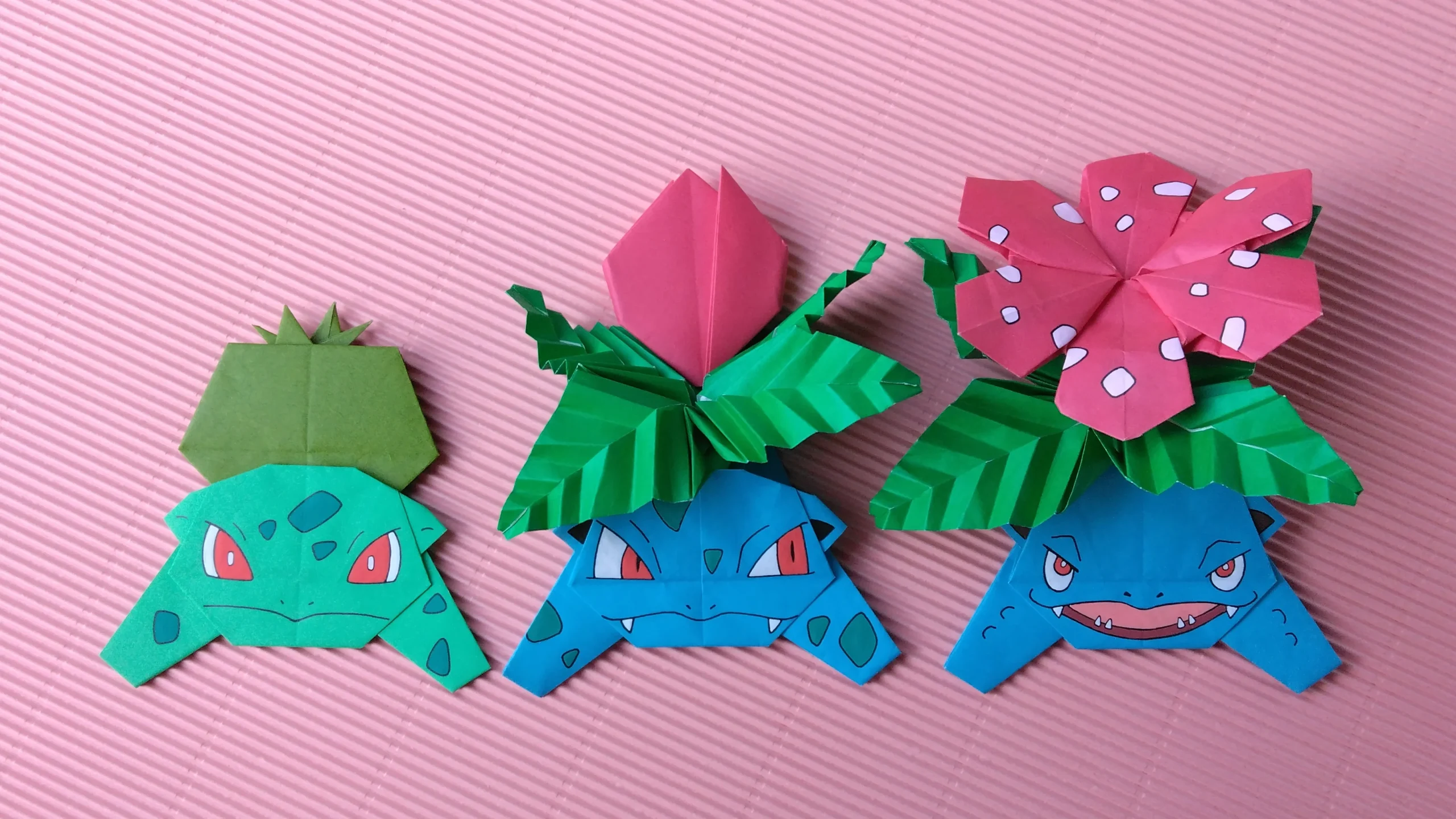
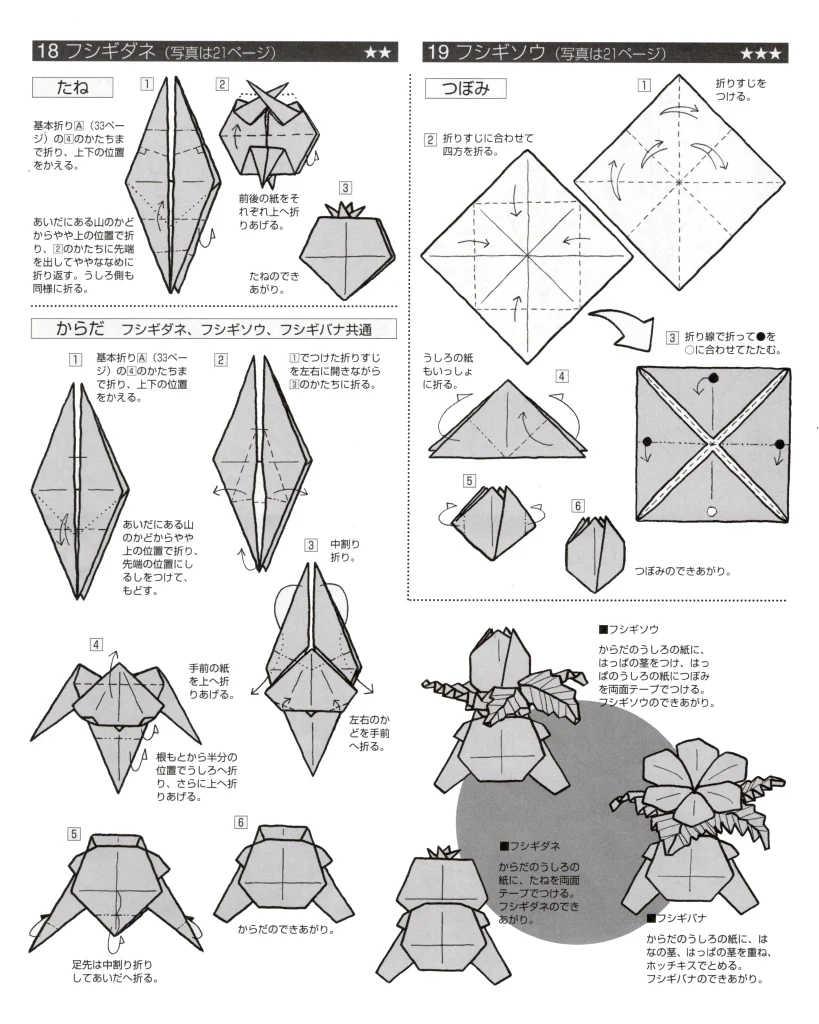
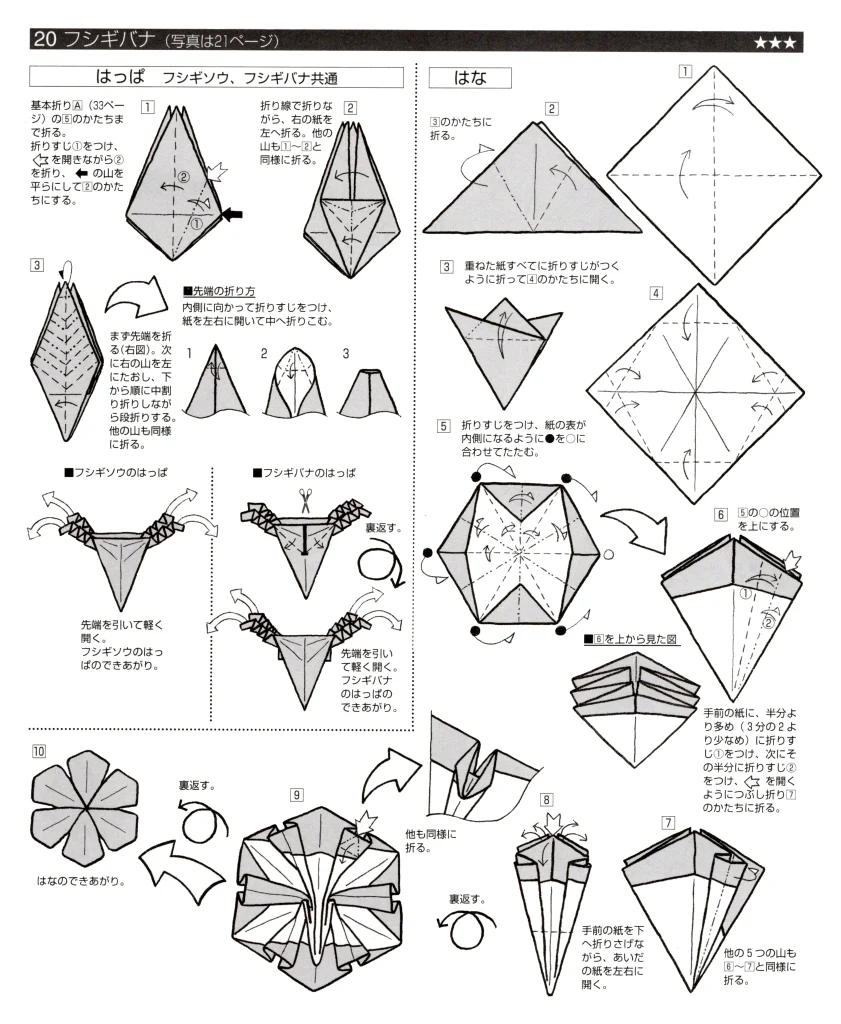
つくり方の折り図
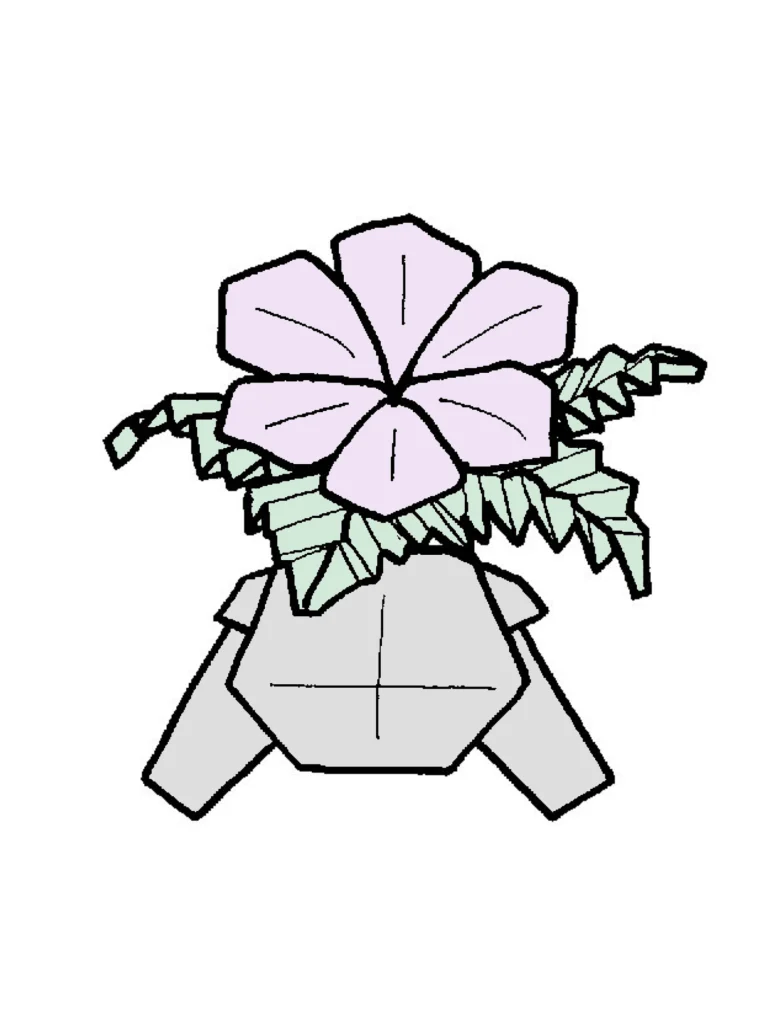
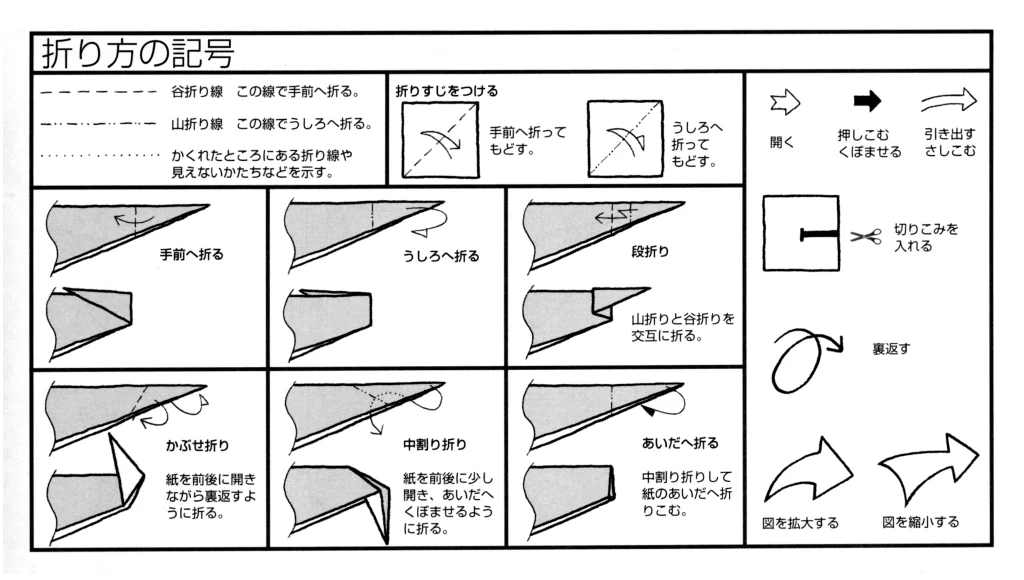
今回制作した折り図
◇折り図
1 基本折り
2 フシギバナのからだ
3 フシギバナのつぼみ
4 フシギバナのはっぱ
■フシギバナのからだは、青色の紙で、まず基本折りの図20まで折る。
■フシギバナのはなは、紅色の紙で折る。
■フシギバナのはっぱは、緑色の紙で、こちらもまず基本折りの図20まで折る。
1 基本折り
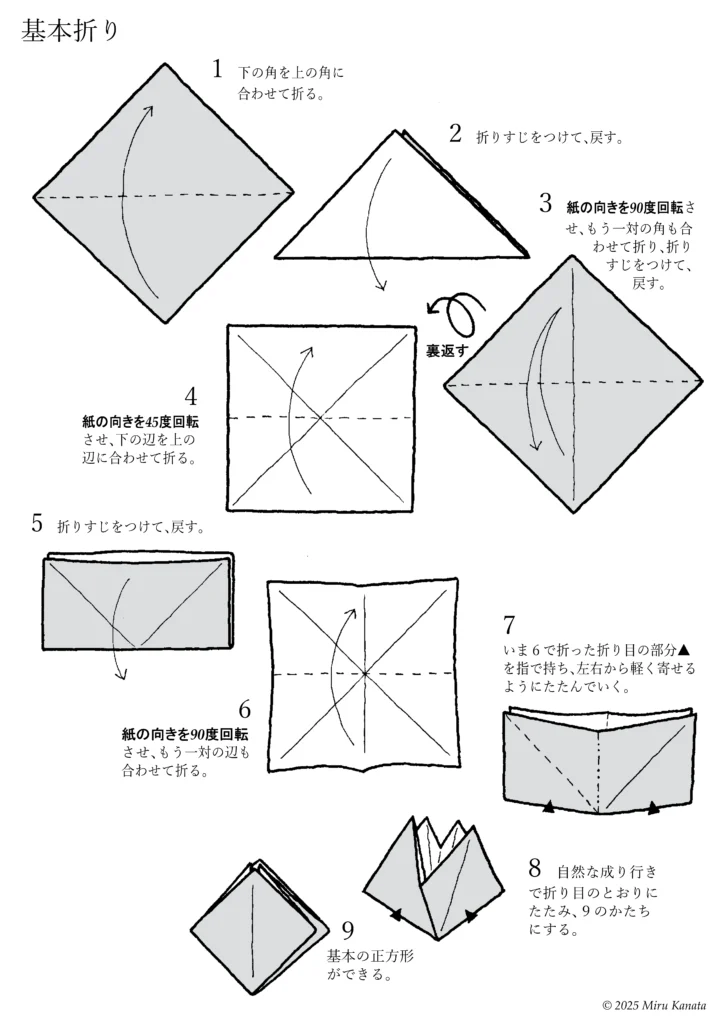
English Commentary
Basic Folding
1 Fold the bottom corner to meet the top corner.
2 Make a crease and return it to its original position.
3 Rotate the paper 90 degrees, fold the other pair of corners together, make a crease and return it to its original position.
{Flip}
4 Rotate the paper 45 degrees and fold the bottom edge to line up with the top edge.
5 Make a crease and return it to its original position.
6 Rotate the paper 90 degrees and fold the other pair of edges together.
7 Hold the crease ▲ made in step 6 with your fingers and fold gently from both sides together.
8 Let the paper naturally fold along the creases to form the shape of 9.
9 A basic square is created.
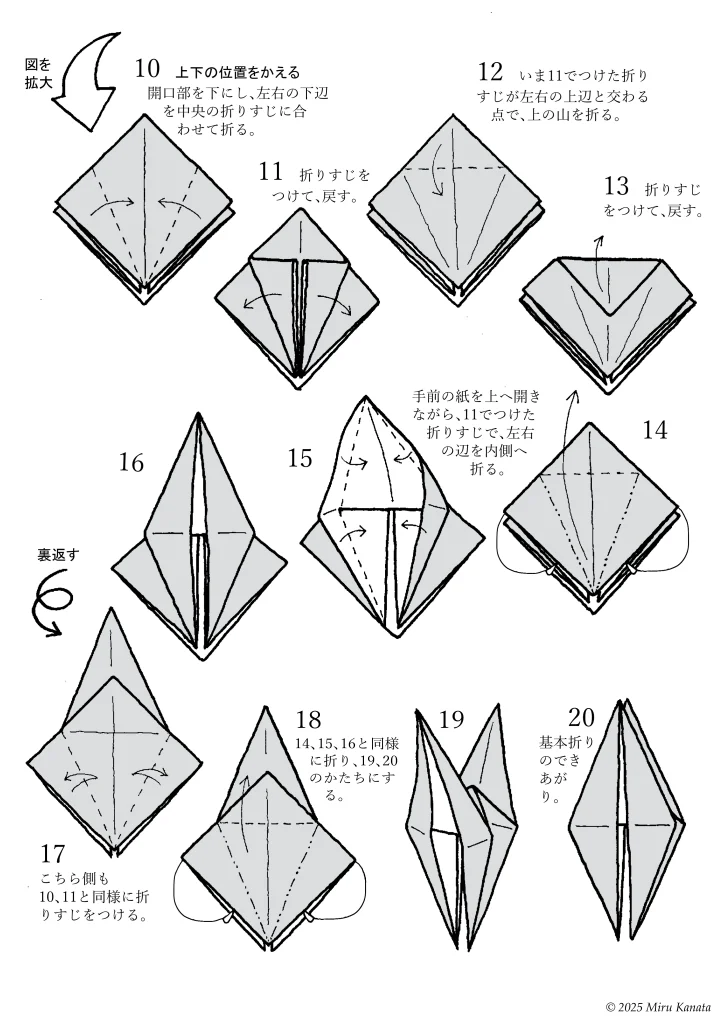
English Commentary
{Enlarge image}
10 Change the top and bottom positions.
With the opening facing downwards, fold the bottom left and right edges to meet the crease in the middle.
11 Make a crease and return.
12 Fold the top at the point where the crease made in 11 intersects with the top left and right edges.
13 Make a crease and return.
14 While opening the front paper upwards, fold the left and right edges inward along the crease made in 11.
15
16
{Flip}
17 Make creases on this side in the same way as 10 and 11.
18 Fold in the same way as 14, 15 and 16 to form 19 and 20.
19
20 The basic fold is complete.
1 フシギバナのからだ
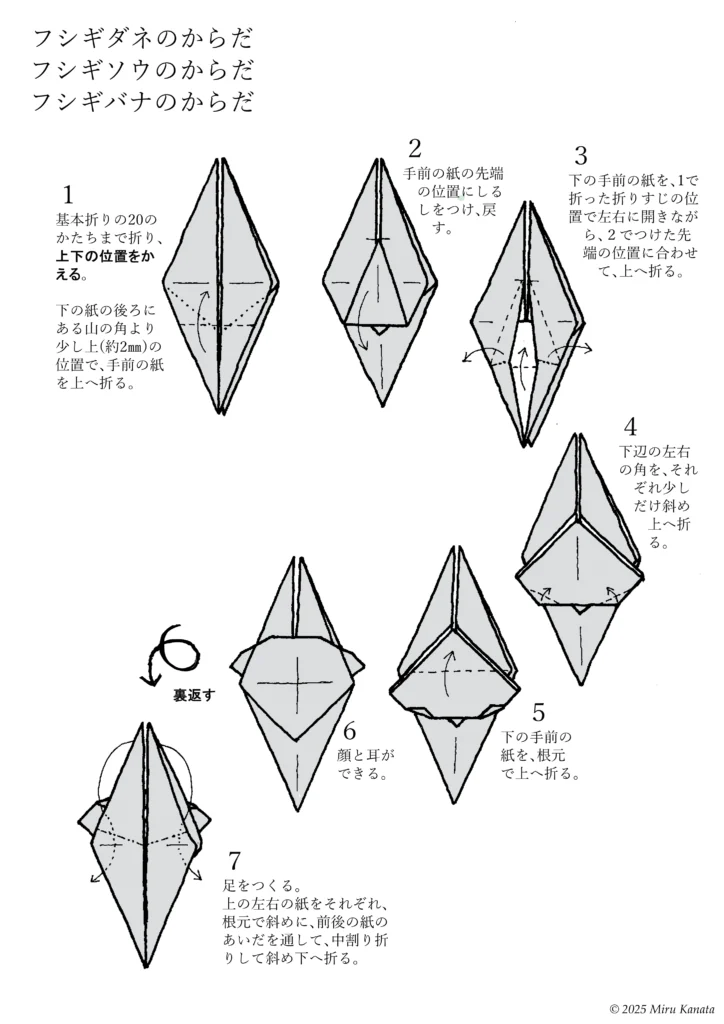
English Commentary
Venusaur’s body
1 Fold it up to the basic 20 shape, then change the top and bottom positions.
Fold the front piece of paper up slightly (about 2 mm) above the corner of the mountain at the back of the bottom piece of paper.
2 Make a mark at the tip of the front piece of paper and return it to its original position.
3 While opening the bottom front piece of paper to the left and right at the crease made in step 1, fold it up to match the tip mark made in step 2.
4 Fold each of the left and right corners of the bottom edge slightly diagonally upwards.
5 Fold the bottom front piece of paper up at the base.
6 The face and ears are made.
7 Make the feet. Fold the top left and right pieces of paper diagonally at the base, passing them between the front and back pieces of paper, and then fold them diagonally downwards.
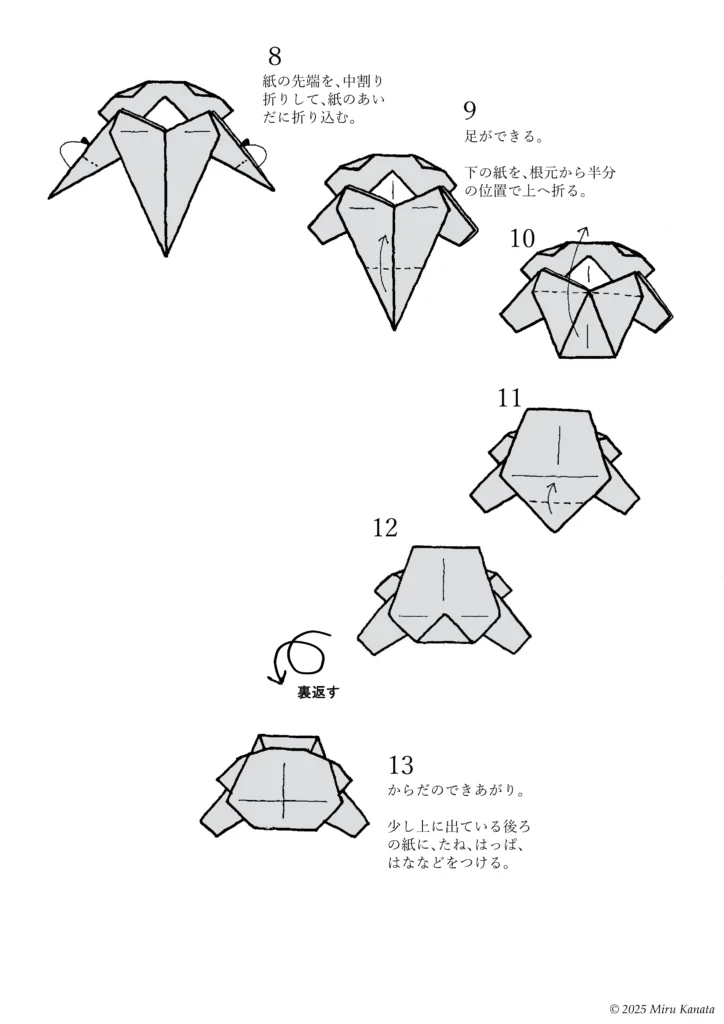
English Commentary
8 Fold the tip of the paper in half and fold it between the pieces of paper.
9 The legs are finished.
Fold the bottom piece of paper up halfway from the base.
10
11
12
{Flip}
13 The body is finished.
Attach the flower and leaf to the back piece of paper that is sticking out a little.
3 フシギバナのはな
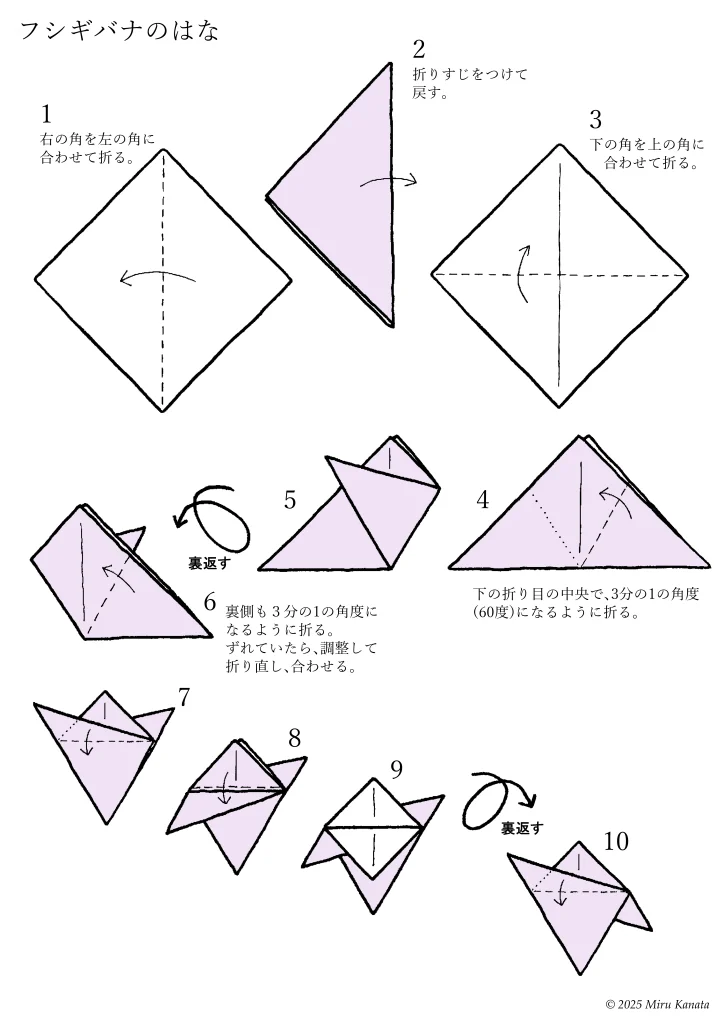
English Commentary
Venusaur Flower
1 Fold the right corner to meet the left corner.
2 Make a crease and return it to its original position.
3 Fold the bottom corner to meet the top corner.
4 Fold the center of the bottom crease so that it forms a one-third angle (60 degrees).
5
{Flip}
6 Fold the back side so that it also forms a one-third angle. If it is not aligned properly, adjust it and fold it again to align.
7
8
9
{Flip}
10
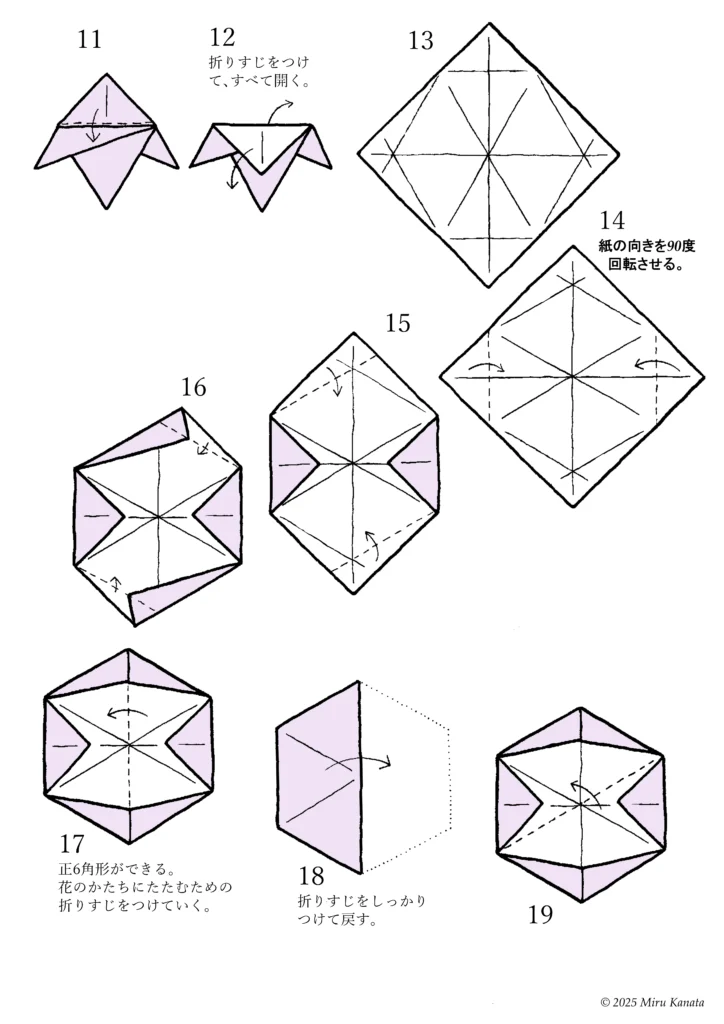
English Commentary
11
12 Make creases and open it all up.
13
14 Rotate the paper 90 degrees.
15
16
17 A regular hexagon is created.
Make creases to fold it into a flower shape.
18 Make creases firmly and return it to its original position.
19
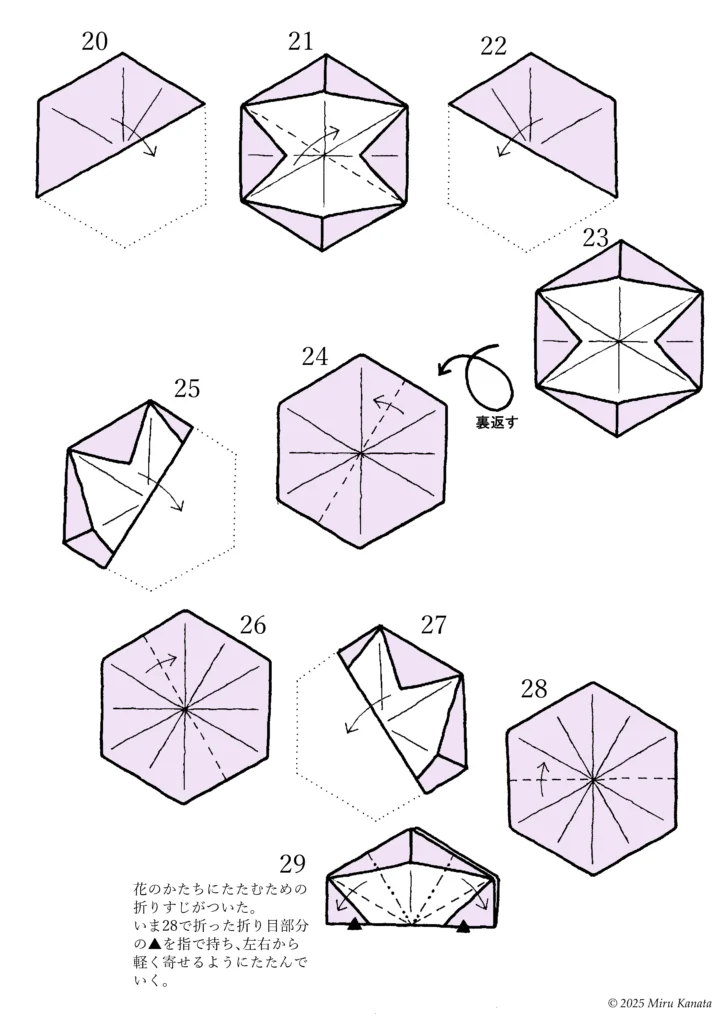
English Commentary
20
21
22
23
{Flip}
24
25
26
27
28
29 Now there are folds to fold into a flower shape. Hold the ▲ at the fold you just made in step 28 with your fingers and gently fold the left and right sides together.
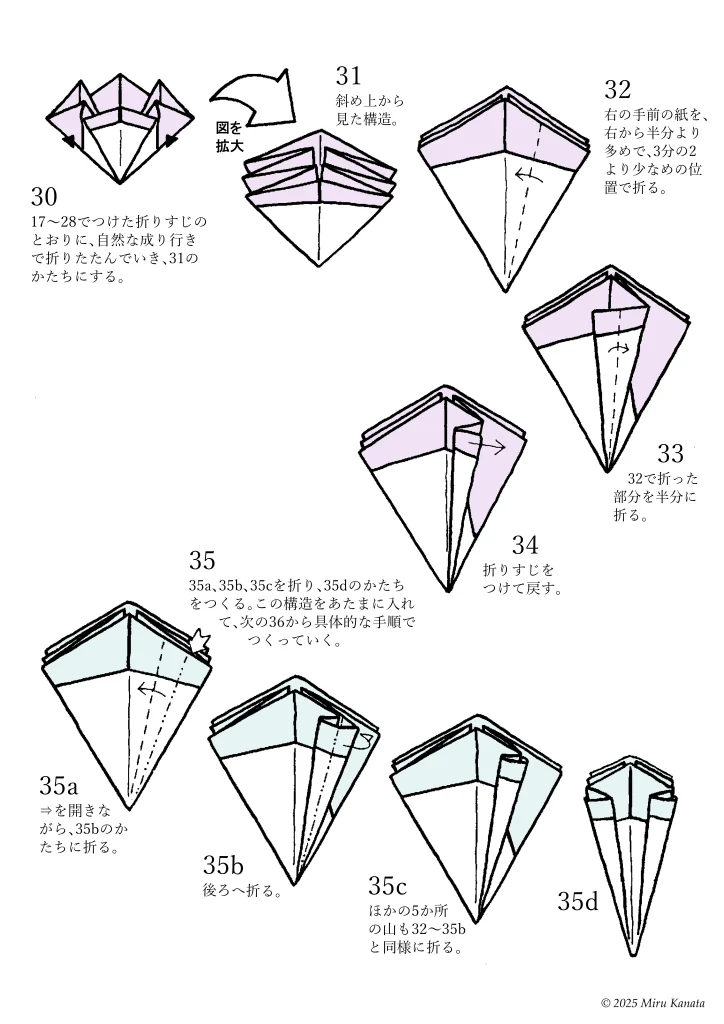
English Commentary
30 Fold naturally along the creases made in steps 17 to 28 to form the shape 31.
(Enlarge image)
31 Structure seen from above at an angle.
32 Fold the paper in the front right, more than halfway from the right, but less than two-thirds of the way.
33 Fold the part folded in 32 in half.
34 Add a crease and return it to its original position.
35 Fold 35a, 35b, and 35c to form the shape of 35d.
Keeping this structure in mind, follow the specific steps from 36 onwards.
35a Open ⇒ and fold it into the shape of 35b.
35b Fold backwards.
35c Fold the other five peaks in the same way as 32 to 35b.
35d
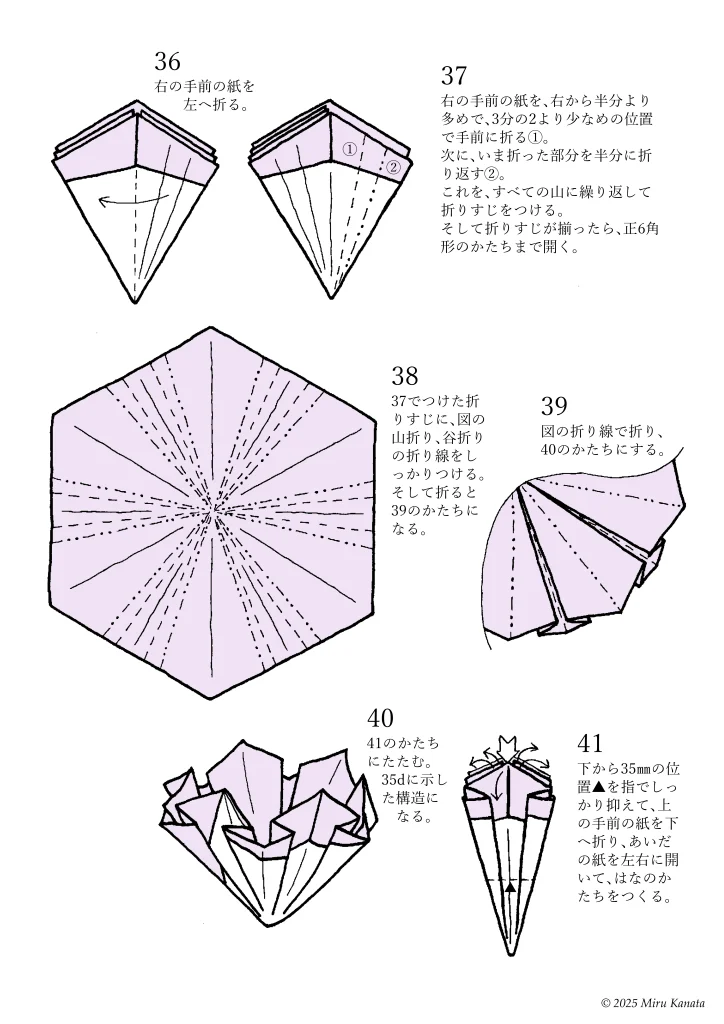
English Commentary
36 Fold the right-front paper to the left.
37 Fold the right-front paper toward you, more than halfway but less than two-thirds from the right (①).
Next, fold the part you just folded in half (②).
Repeat this for all the mountain folds to create creases.
Once the creases are aligned, unfold it until it forms a regular hexagon.
38 Firmly mark the mountain fold and valley fold lines in the diagram on the creases made in 37. When you have finished folding, it will form the shape of 39.
39 Fold along the fold lines in the diagram to form the shape of 40.
40 Fold it into the shape of 41. You will end up with the structure shown in 35d.
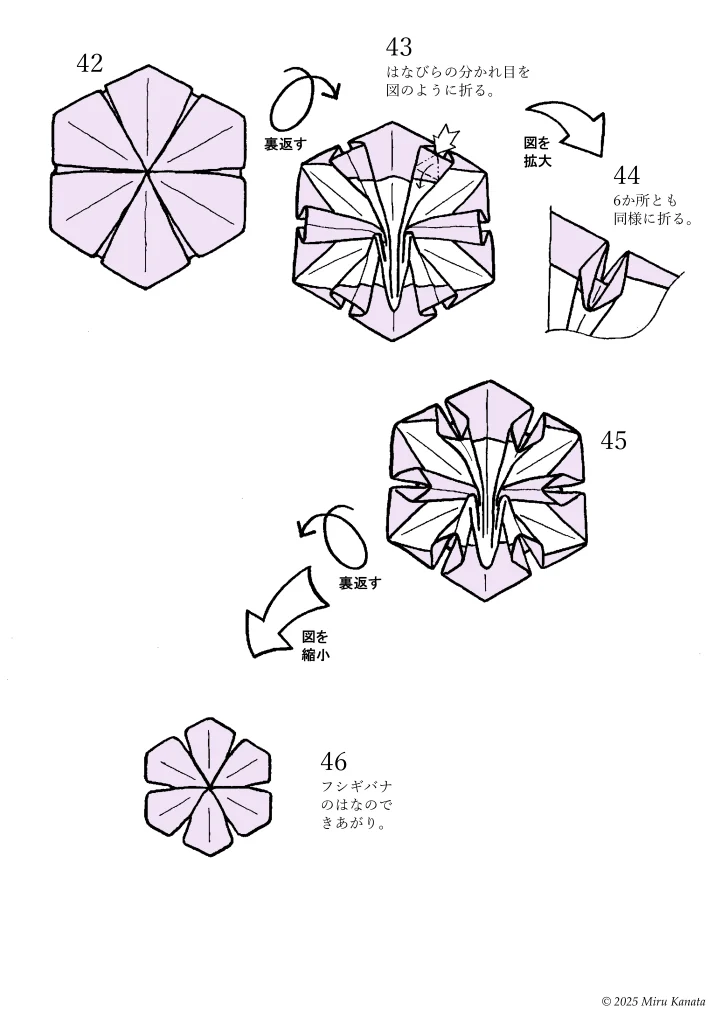
41 Firmly hold down the position ▲ 35 mm from the bottom with your fingers, fold the top front paper downwards, and open the paper in between to the left and right to form the shape of a flower.
English Commentary
42
{Flip}
43 Fold the petal where it separates as shown in the diagram.
{Enlarge diagram}
44 Fold in the same way at all six places.
45
{Flip}
{Reduced diagram}
46 Your Venusaur flower is complete.
4 フシギバナのはっぱ
English Commentary
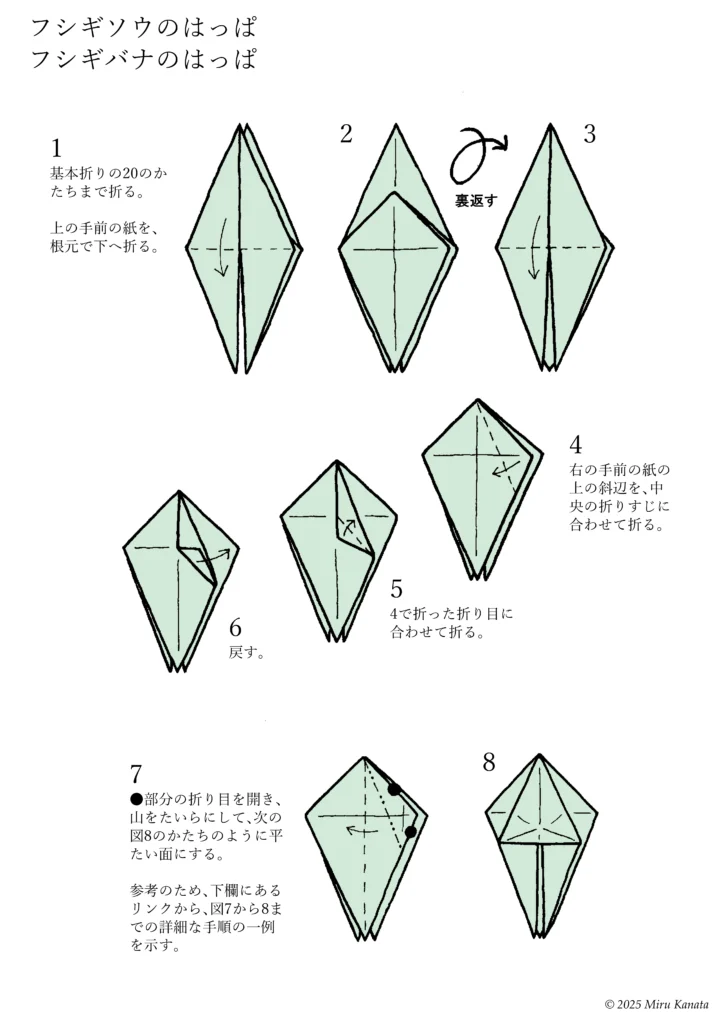
Venusaur Leaf
1 Fold up to the basic fold shape of 20.
Fold the top front piece of paper down at the base.
2
{Flip}
3
4 Fold the top diagonal side of the right front piece of paper to match the crease in the center.
5 Fold it to match the crease made in 4.
6 Turn it back.
7 Open the creases in the ● part and flatten the peaks to create a flat surface as shown in Figure 8 below.
ページを行ったり来たりするのは煩雑なので、次に掲載する。
English Commentary
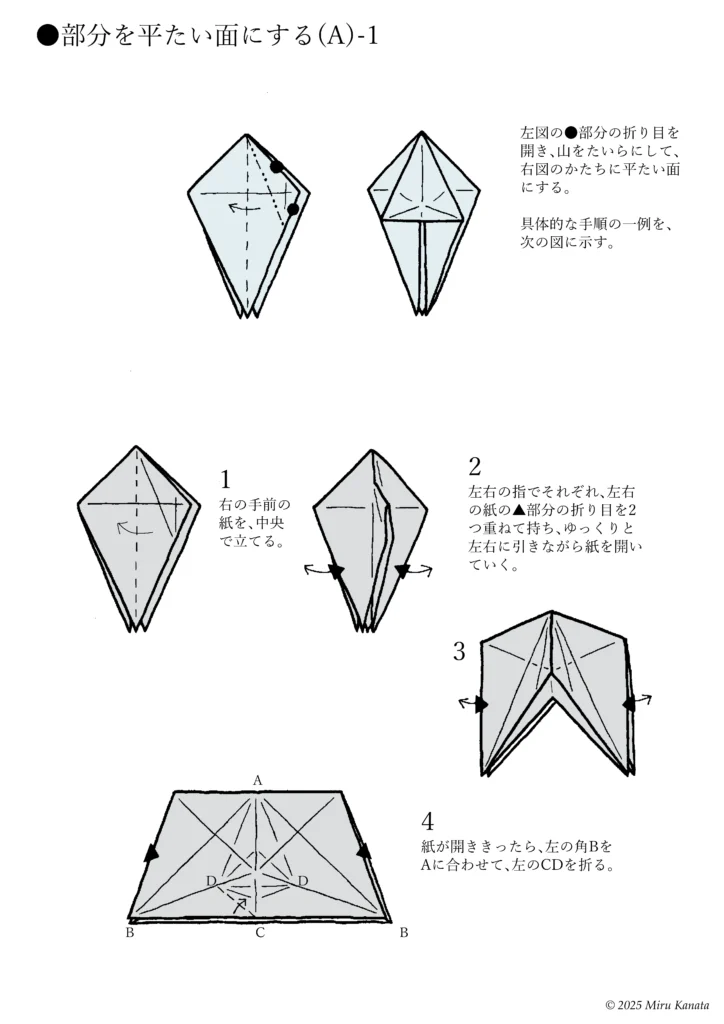
Make the ● part flat (A)-1
Open the folds marked with ● in the left image, flatten the folds, and create a flat surface like the one in the right image.
An example of the specific steps is shown in the following image.
1 Stand the front right piece of paper up in the center.
2 Hold the two folded edges of the paper with your fingers, overlapping each other, at the ▲ part on each side, and slowly pull the paper left and right to open it.
3
4 Once the paper is fully opened, align the left corner B with A and fold the left CD.
English Commentary
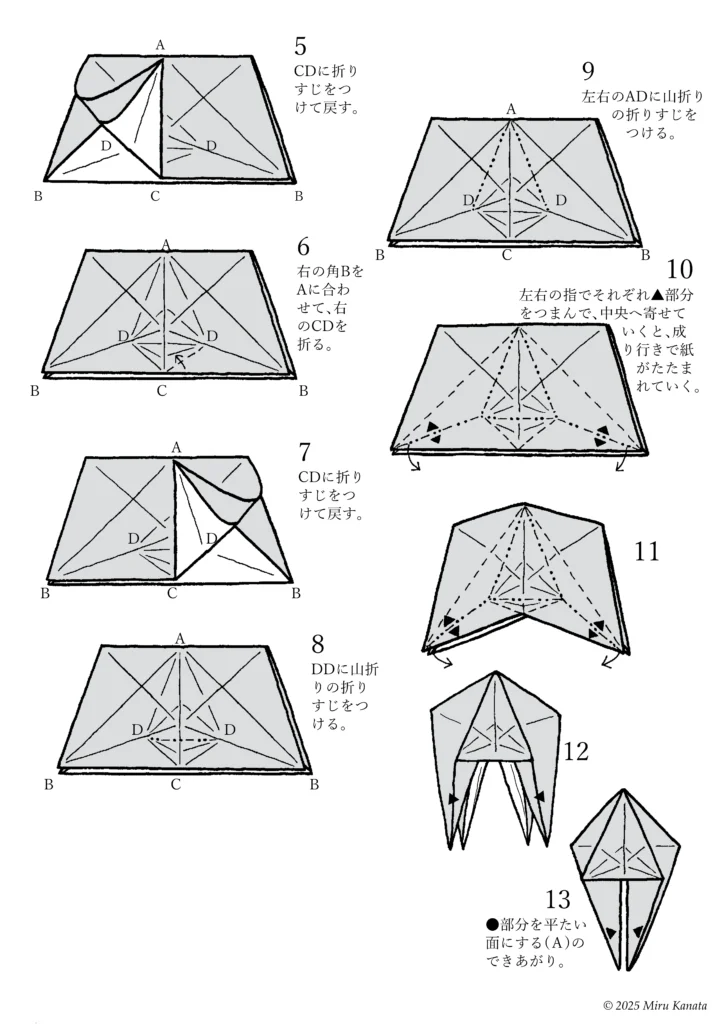
5 Make a crease in the CD and return it to its original position.
6 Fold the right side of the CD, aligning the right corner B with A.
7 Make a crease in the CD and return it to its original position.
8 Make a mountain fold crease at DD.
9 Make mountain fold creases at AD on both the left and right sides.
10 Pinch the ▲ parts with your fingers on both sides and move them towards the center, and the paper will fold naturally.
11
12
13 Make the ● part flat (A) is complete.
English Commentary
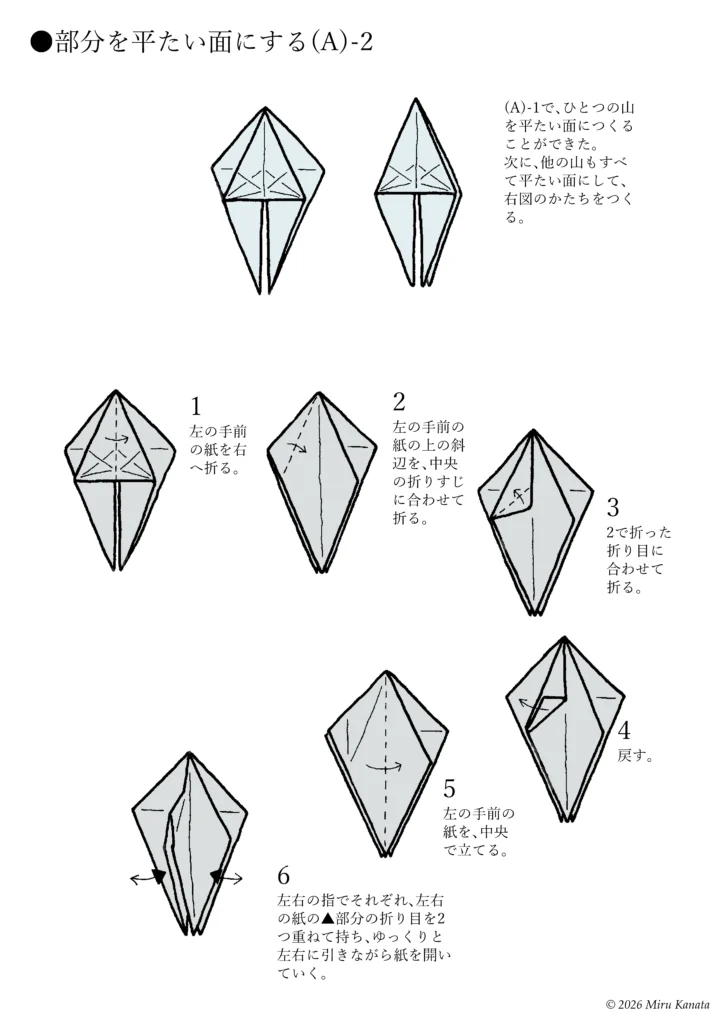
● Flatten the area (A)-2
In (A)-1, we were able to create one mountain with a flat surface. Next, we flatten all the other mountains as well to create the shape shown in the right diagram.
1. Fold the front left piece of paper to the right.
2. Fold the top diagonal edge of the front left piece of paper to meet the center crease.
3. Fold along the crease made in step 2.
4. Unfold.
5. Stand the front left piece of paper upright in the center.
6. Using your left and right fingers, hold the two folds at the ▲ sections of the left and right pieces of paper, overlapping them, and slowly pull them to the left and right to open the paper.
English Commentary
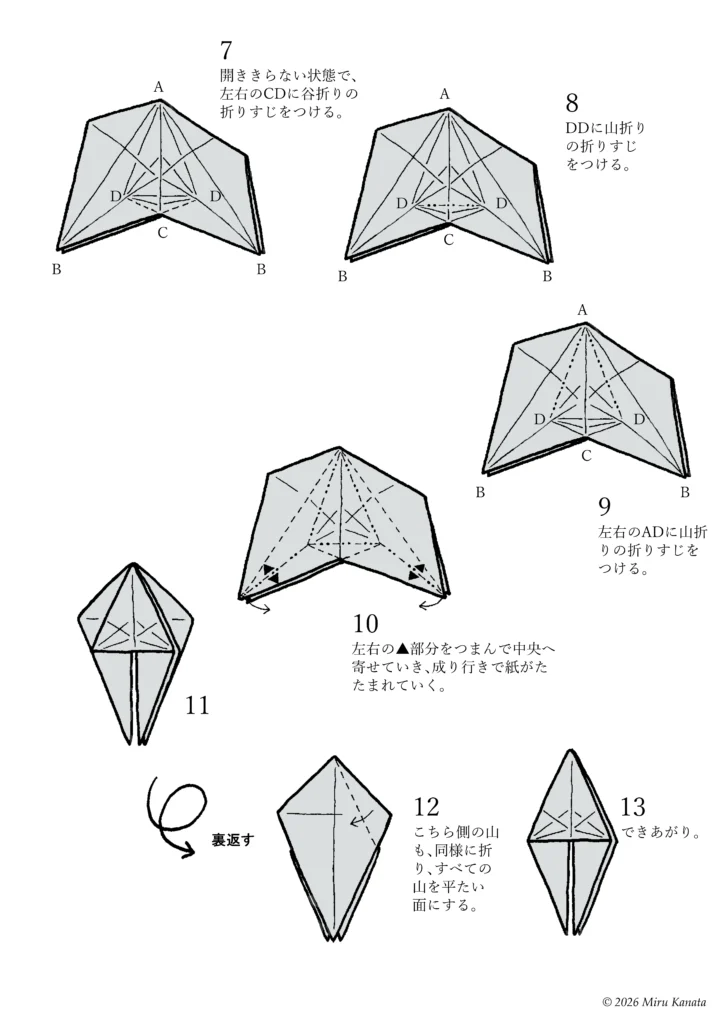
7 With the paper not fully open, make valley folds on the left and right CDs.
8 Make mountain folds on DD.
9 Make mountain folds on the left and right ADs.
10 Pinch the ▲ parts on the left and right and bring them towards the center, and the paper will fold naturally.
11
{Flip}
12 Fold the mountain on this side in the same way, making all the mountain sides flat.
13 Finished.
English Commentary
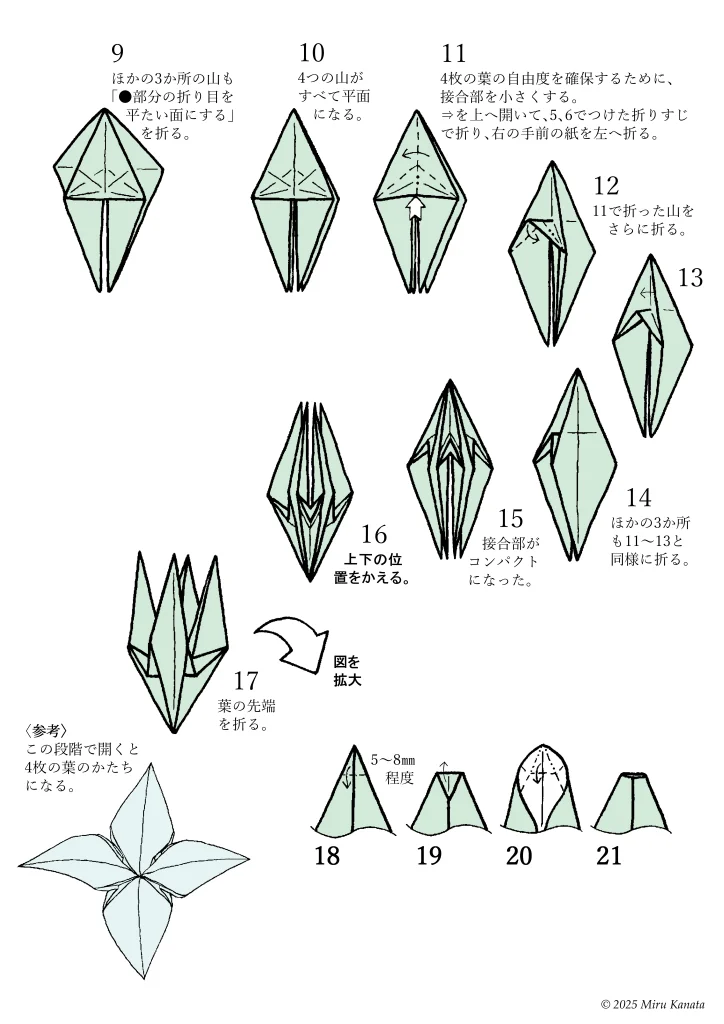
9 Fold the other three piles as well, making the creases at the ● parts flat.
10 All four piles will be flat.
11 Make the joints smaller to ensure the freedom of movement of the four leaves.
Open ⇒ upwards, fold along the creases made in steps 5 and 6, and fold the front right piece of paper to the left.
12 Fold the pile folded in step 11 again.
13
14 Fold the other three places in the same way as steps 11 to 13.
15 The joints are now compact.
16 Change the top and bottom positions.
17 Fold the tip of the leaf.
{Reference} If you open it at this stage, it will have the shape of four leaves.
{Enlarge the diagram}
18
19
20
21
English Commentary
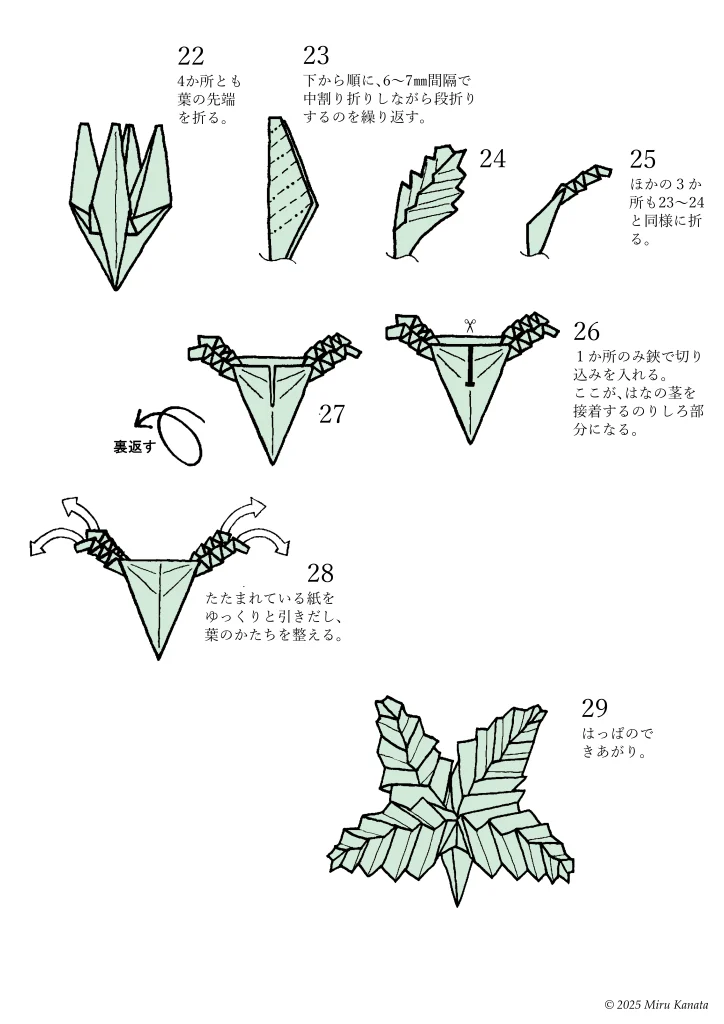
22 Fold the tip of the leaf in all four places.
23 Starting from the bottom, repeat the process of folding in half at 6-7 mm intervals.
24
25 Fold the other three places in the same way as steps 23-24.
26 Make a slit with scissors in only one place. This will be the adhesive tab where the flower stem will be glued.
27
{Flip}
28 Slowly pull out the folded paper and arrange the leaf shape.
29 The leaf is finished.
English Commentary
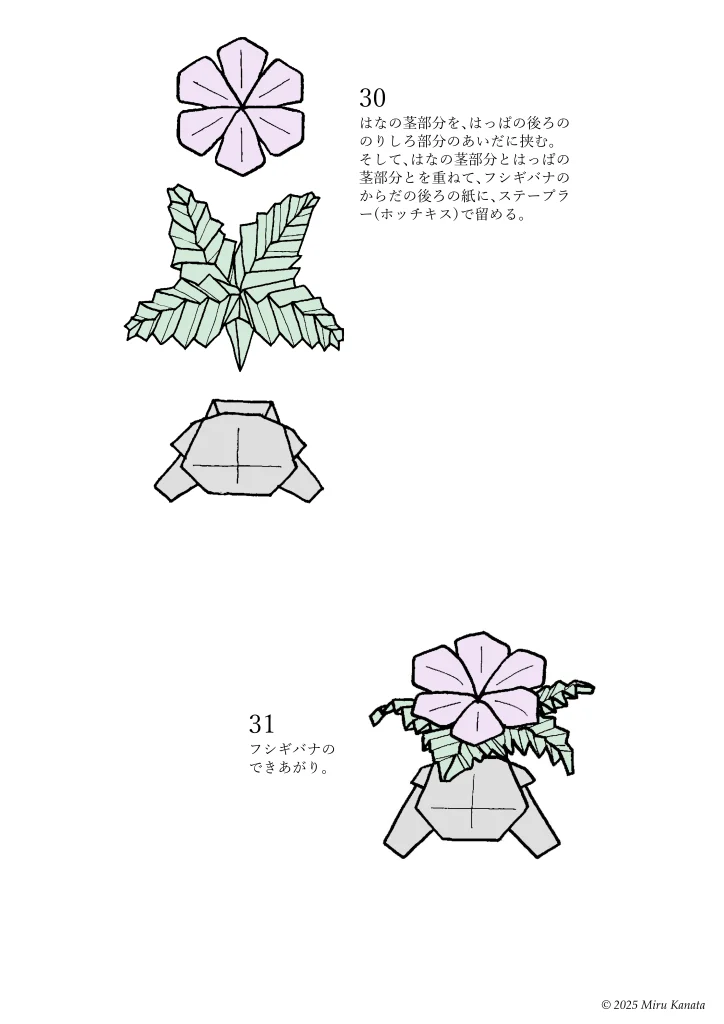
30 Place the flower stem between the tabs at the back of the leaf. Then, overlap the flower stem and leaf stem and use a stapler to attach them to the paper at the back of Venusaur’s body.
31 Venusaur is finished.
補足・フシギバナのはなの表現について
フシギバナのはなについて、はなびらの向きやかたちなど、いくつか試作してみました。
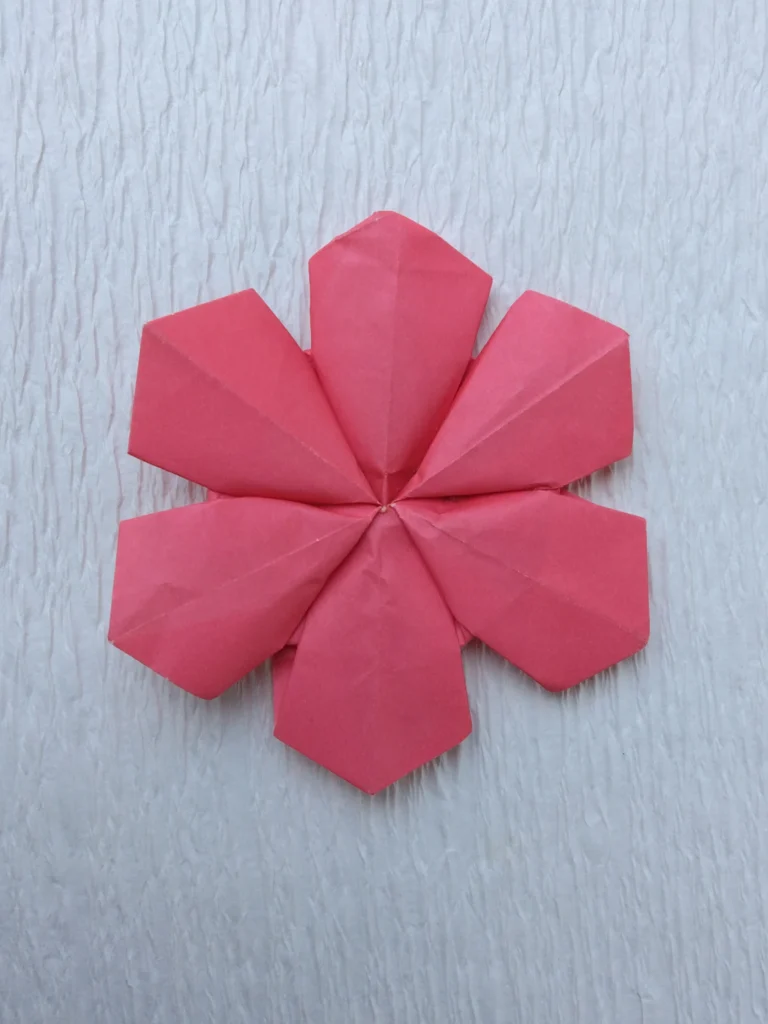
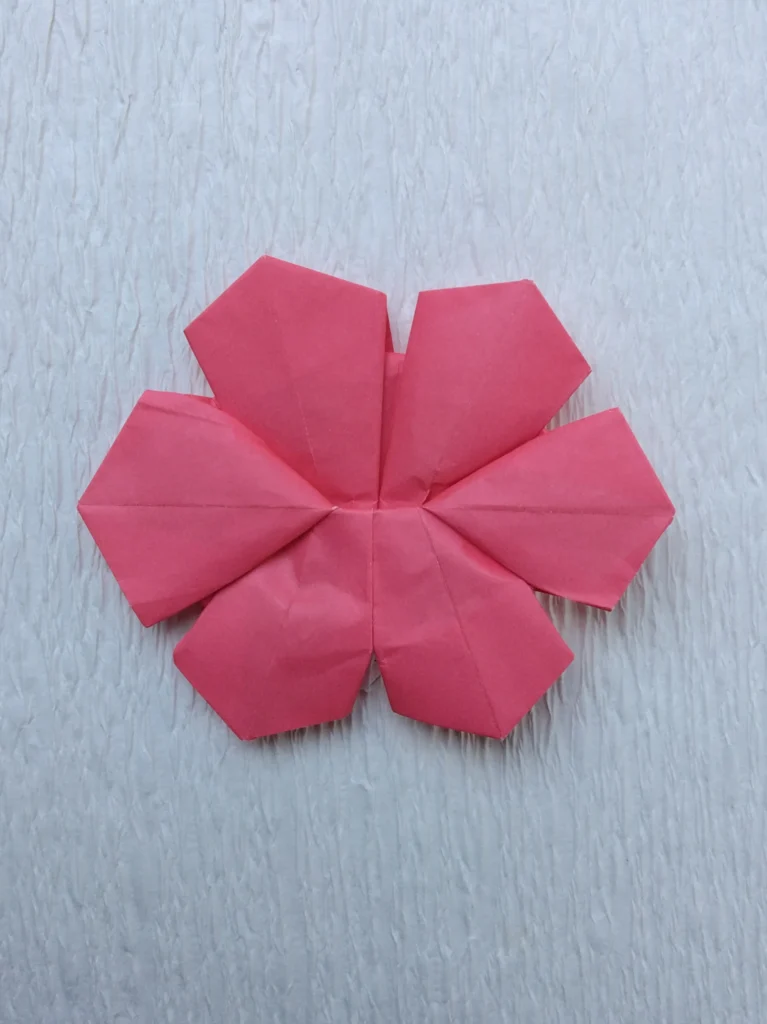
フシギバナのはなびらの向き
フシギバナのはなは、正面にはなびらの分かれ目がきています。
でも、6枚のはなびらをつくると、おりがみの構造上、はなびらが正面になります。
それで、分かれ目が正面になるようにつくってみましたが、構造上どうしても写真のようなかたちになります。
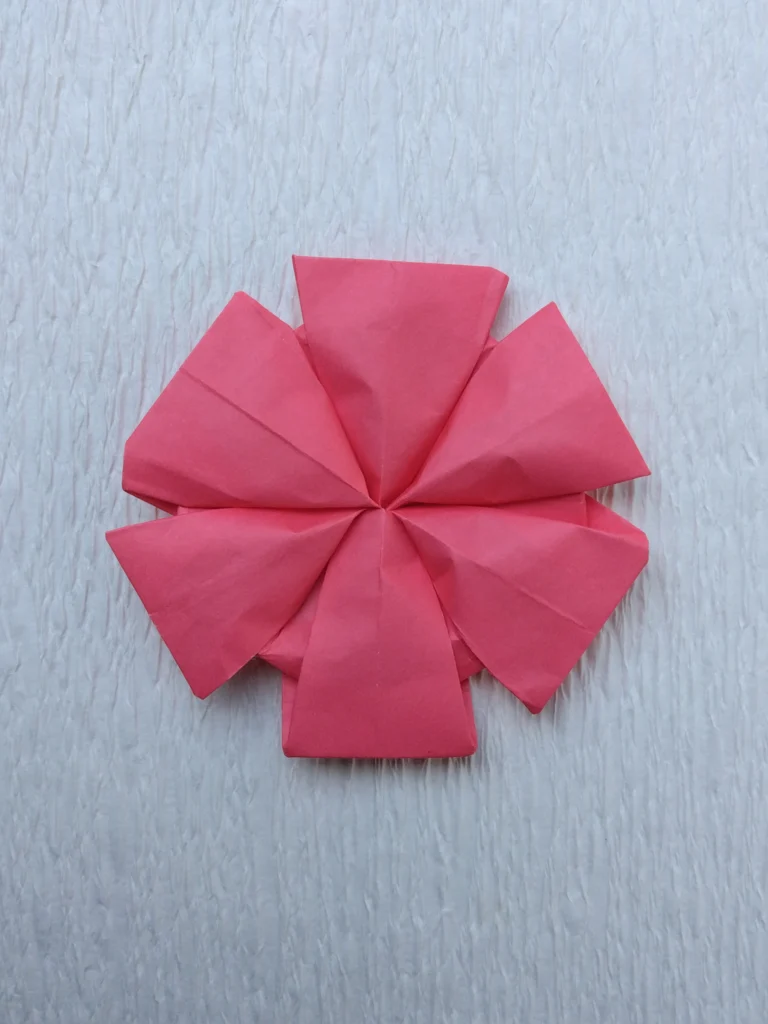
フシギバナのはなびらの形状
フシギバナのはなの、はなびらの先端は矩形になっています。
矩形のはなびらもつくってみましたが、長さ不足で、充分とは言えなそうです。
フシギバナのはなの芯
フシギバナのはなの真ん中には、雄しべ雌しべみたいな黄色の部分があります。
でも、はなの中心に突起を折り出すことは、できなくはないけど、きれいにまとめるのは困難でしたので、断念しました。
また、ここに黄色い紙の切片を差し込むとしたら、もうそれは切り紙細工とかペーパークラフトとかの領域となり、おりがみではなくなってしまうので、しませんでした。
検討の結果
いろいろ検討した結果、完成形の写真に示したかたちがもっとも適切と判断しました。
そして幸運なことに、それがゲームフリークのチェックでOKとなりました。
参考・2000年の本に掲載した折り図
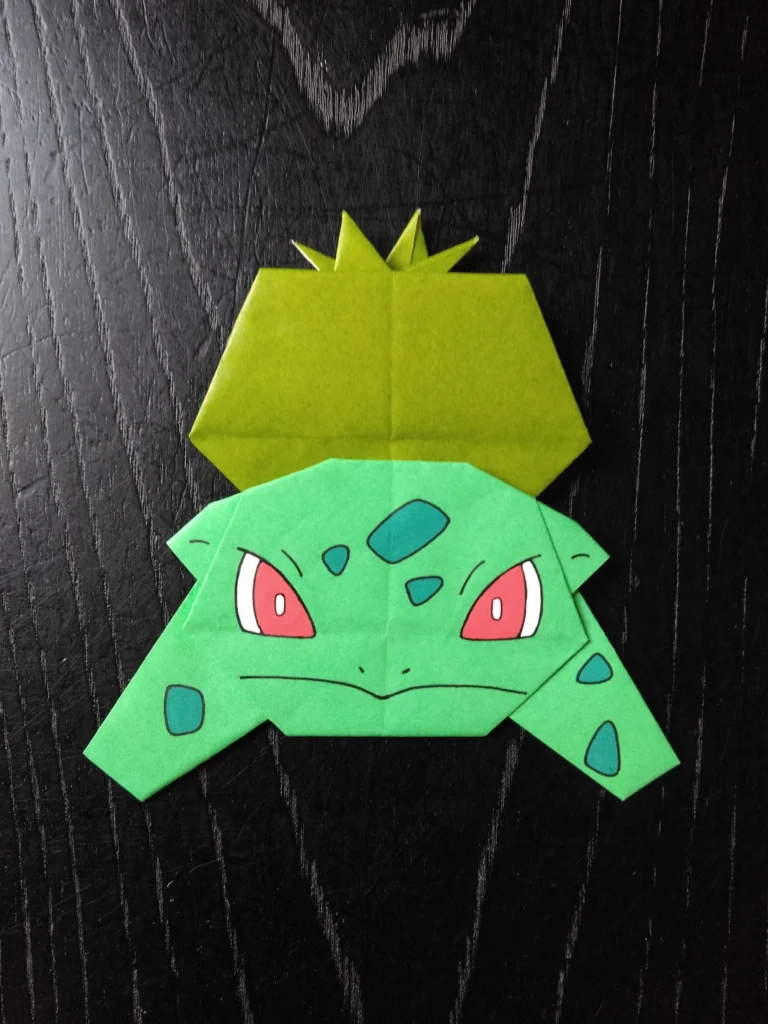
みるかなた本棚>『ポケットモンスターおりがみコレクション』>ポケモンおりがみ一覧表>0003フシギバナ
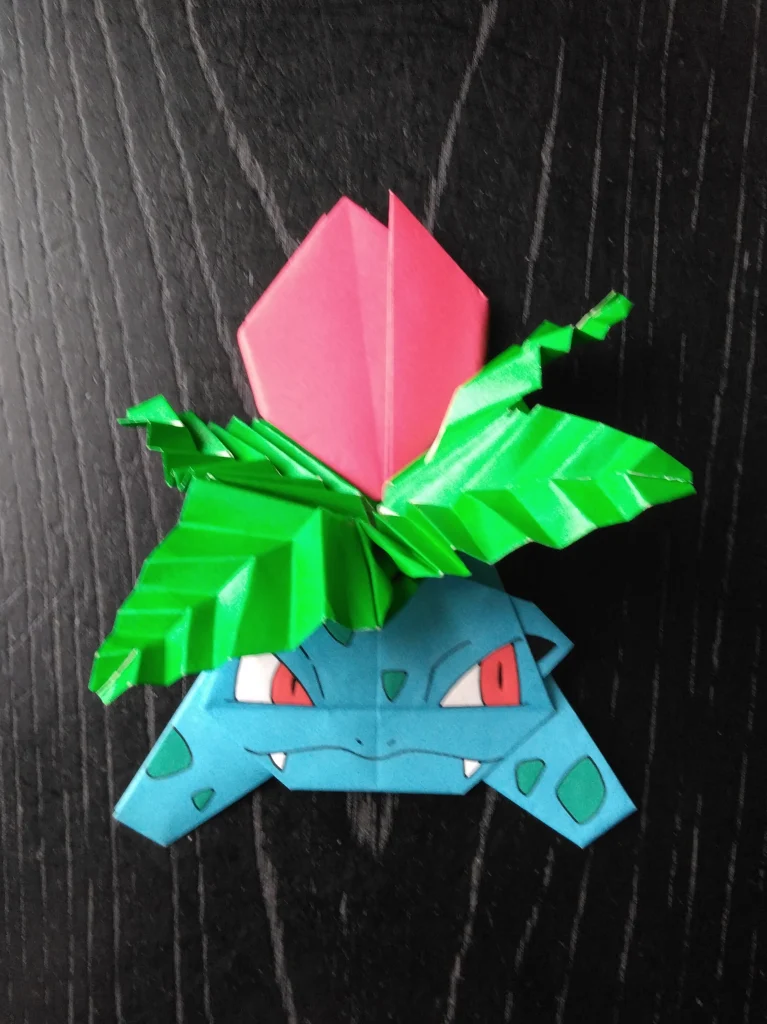
◆別作新作ファン創作
◇ ◇ ◇